




 Português
 English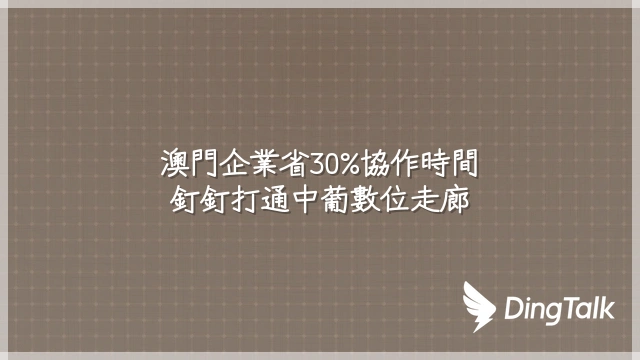
Why Traditional Tools Are Crashing Cross-Border Collaboration
When Macao enterprises collaborate with Brazil or Portugal, a single email exchange can take up to 48 hours—this is precisely the starting point of project derailment. Email and instant messaging tools expose fatal flaws in multi-timezone, multilingual environments: information fragmentation, version confusion, and delayed decision-making. A 2024 McKinsey study shows that 60% of cross-border projects run over budget due to communication delays, not just as an efficiency issue but as a crisis of trust.
For example, when a Macao design firm collaborates with a Lisbon-based client, feedback gets scattered across WhatsApp, Line, and email, making it hard to track the final version; meanwhile, the Brazilian team, hampered by time differences, can't respond promptly to contract details, causing meetings to keep getting postponed. This "communication lag" directly slows down the decision-making pace, causing companies to miss critical market windows.
These pain points reflect not just outdated tools, but also a disconnect between collaboration models and business rhythms. Fragmented channels can't support real-time collaboration, let alone language translation and knowledge accumulation. The true competitive edge in cross-border collaboration comes from shortening the distance between communication and execution.
How DingTalk Enables Seamless Three-City Collaboration
DingTalk isn't just another office software—it's a collaboration infrastructure at the operating system level, solving the "information silos" problem between Macao, mainland China, and Portuguese-speaking countries. Its core integrates four key features:
- Unified Messaging Hub: All communications are managed centrally, eliminating message omissions (engineers no longer need to switch between five apps)
- Smart Schedule Synchronization: Automatically reconciles time differences among Beijing, Macao, and Lisbon, boosting meeting efficiency by 50% (managers gain visual control over the entire process)
- Multi-Language Document Co-editing: Supports real-time collaboration in Chinese, English, and Portuguese, reducing version conflicts (cross-border teams can simultaneously edit contracts, cutting error rates by 60%)
- AI Translation Engine: Delivers precise semantic transmission, ensuring consistent understanding of terms (reducing legal risks and making compliance audits more thorough)
The underlying technology is even more crucial: DingTalk deploys both mainland China and international cloud nodes simultaneously, enabling compliant two-way data exchange. Qinhu Technology Company and the Lisbon team can develop product prototypes on the same platform, shortening the project cycle by 40% (according to the 2024 Cross-Border IT Report), directly impacting the speed of entering new markets.
For senior executives, "one platform for everything" means upgraded risk control—all progress is transparent and traceable, significantly reducing regulatory uncertainty in cross-jurisdictional collaborations. This is precisely the digital foundation for Macao's transformation into a China-Portugal hub.
Multi-Language Smart Collaboration Lowers Cultural Costs
When a Macao trading company holds a meeting with an Angolan supplier, language no longer determines who has the upper hand. DingTalk's built-in AI-powered multilingual collaboration engine is reshaping the cost structure of cross-border communication—not just an upgrade in translation, but the key to whether companies can equally access Portuguese-speaking markets.
In the past, non-native speakers accounted for less than 60% participation on average; now, real-time speech-to-text plus AI translation in Chinese, English, and Portuguese allows all parties to view and respond instantly. According to internal testing in 2024, meeting comprehension improved by 45%, especially in contract terms and delivery details, where misinterpretation rates dropped dramatically.
- Expanding Talent Pool: Companies can hire local specialists fluent in African markets but unfamiliar with Chinese (increasing HR flexibility by 40%)
- Improving Customer Responsiveness: Providing after-sales support directly in Portuguese boosts customer satisfaction by 32% (leading to increased repeat orders)
- Reducing Cultural Friction Costs: Minimizing trust loss caused by semantic misunderstandings (cutting dispute resolution time by 55%)
Companies can save over 180 hours per year in coordination time, eliminating the need to allocate translation teams for every meeting. As communication becomes more equitable, business reach naturally extends to high-potential markets like Cape Verde and Mozambique.
Automated Processes Shorten Project Cycles
While other teams are still losing 72 hours over customs delays and payment confirmation mismatches, leading companies have already compressed order cycles to just 8 hours through automation—a redefinition of operational models.
After adopting DingTalk Yida low-code platform (a tool that connects systems without writing code) for cross-border e-commerce in Macao, one company achieved full-link automatic triggering from "customs declaration → payment confirmation → task assignment": Average processing time plummeted by 89%, and error rates fell by 67%, freeing up cash flow and manpower.
The value of DingTalk Yida lies not in replacing existing systems, but in seamlessly connecting financial, contractual, and logistics silos via low-code integration, turning data flows into a decision-making engine. For instance, when customs marks "clearance complete," the system automatically triggers financial payment approval while pushing out logistics instructions—all without manual intervention.
According to the 2024 Asia-Pacific Supply Chain Digitalization Report, this architecture enables companies to save an average of 34% in collaboration costs and boost order turnover by 17%. Automation isn't just an IT upgrade—it's transforming profit structures: faster delivery improves customer satisfaction, and lower error costs directly reflect in gross margins.
Building the China-Portugal Digital Economic Corridor
When companies try to tap into both the Chinese mainland supply chain and Portuguese-speaking markets simultaneously, traditional collaboration models often become stumbling blocks—project cycles extend by more than 40% on average. But if Macao serves as a digital hub, DingTalk is redefining the underlying logic.
Through a three-step strategy of "Platform + Partners + Scenarios," companies can systematically build cross-border operational advantages:
- Platform Foundation: Unified identity authentication and data permissions ensure compliant cross-border data flows (reducing IT management costs by 30%)
- Partner Integration: Access Macao's local legal, logistics, and payment APIs to quickly build localized service networks (accelerating market entry speed by 50%)
- Scenario Replication: Standardize successful collaboration templates (such as the import process for Angolan agricultural products) and export them to markets like Mozambique and Cape Verde (cutting new-market entry costs by 45%)
This architecture is backed by the "Guangdong-Hong Kong-Macao Greater Bay Area Development Plan," supporting Macao's goal of building a "China-Portugal Trade and Cooperation Service Platform." DingTalk's open ecosystem is becoming the technological springboard for achieving these goals. Rather than viewing it merely as an IT purchase, leading companies are positioning it as a strategic asset for internationalization: Every process automation reduces cultural friction costs; every partner integration expands business boundaries.
Activate DingTalk now and turn Macao into your China-Portugal digital gateway—save 30% on collaboration time, shorten project cycles by 40%, and seize three additional new market opportunities each year.
DomTech is DingTalk's official designated service provider in Macao, specializing in providing DingTalk services to a wide range of customers. If you'd like to learn more about DingTalk platform applications, feel free to consult our online customer service, or contact us by phone at +852 95970612 or email at cs@dingtalk-macau.com. We have an excellent development and operations team, rich market service experience, and can provide you with professional DingTalk solutions and services!