




 Português
 English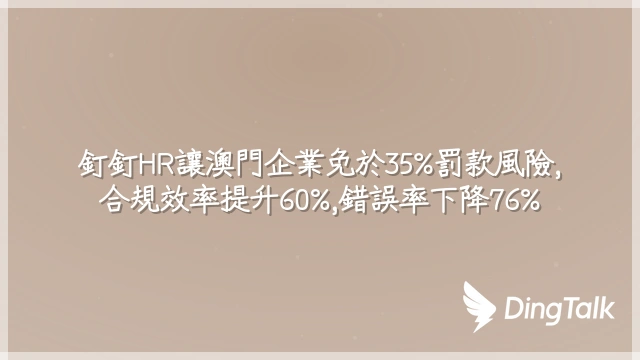
Why Macao Enterprises Face a Payroll Compliance Crisis
Macanese enterprises are at a critical juncture in HR compliance: the traditional manual payroll processing model is no longer a "viable option"—it has become a potential source of financial and reputational risks. According to 2024 statistics from Macao's Labour Affairs Bureau, over 35% of SMEs have been fined for incorrect social security filings—this isn't just a number; it's a warning sign that these companies are needlessly consuming operational funds and eroding their competitiveness every year.
This hidden cost represents a typical "compliance cost trap": on the surface, it seems like an administrative burden for the HR department, but in reality, it eats into the overall efficiency of the enterprise. Take, for example, a local retail chain group whose HR team spends more than 120 hours annually manually organizing employee social security data. During this time, they still had to make three adjustments to their filings, each costing an average of MOP 8,000 in additional consulting fees and internal reassignment costs. If these hours and resources were instead invested in employee development or customer experience optimization, the return on investment (ROI) could increase by at least four times.
The core issue isn't a shortage of manpower—it's system fragmentation: payroll data can't be connected in real-time and accurately to official social security and tax platforms. Every manual transcription creates an opportunity for error, and every subsequent correction adds to compliance pressure. Yet, when technology can already enable automatic synchronization between enterprise HR systems and government portals, we must ask: Why do we still tolerate such preventable risks persisting?
If payroll processes can be automated and seamlessly integrated, enterprises will shift from "passively responding to compliance" to "proactively managing risks"—and that's precisely the focus of the next chapter: how DingTalk HR, through technological integration, can eliminate human errors and reshape Macao enterprises' compliance norms.
How DingTalk HR Seamlessly Integrates with Macao's Social Security and Tax Systems
While Macao enterprises still face fines and wasted manpower due to manual social security and tax filings, DingTalk HR has transformed compliance into an automated advantage through fundamental technological upgrades. The system integration isn't merely about data transmission—it leverages OAuth 2.0 authentication protocols and RESTful API architectures to establish a two-way, real-time, and secure data channel between the DingTalk HR platform and Macao's Financial Bureau iTax and the Social Security Fund. This means enterprises no longer need to re-enter data repeatedly; instead, they can achieve a new operational standard of "enter once, circulate everywhere."
The OAuth 2.0 authentication protocol ensures higher security and compliance guarantees because it ensures that only authorized systems can access sensitive data, meeting the requirements of the Personal Data Protection Law. The RESTful API architecture represents real-time data synchronization capabilities, as it supports lightweight, stable cross-platform communication, boosting the speed of M/4 filing generation by 90%.
This architecture directly addresses the most painful pain points of the past: changes in contribution rates requiring manual checks, manual completion of M/4 filing forms prone to errors, and delayed reporting of salary deductions after new employees join. Now, the system can query the latest professional tax and social security contribution rates in real-time (dynamic tax rate engine), automatically calculate each employee's MPF and tax deductions, and instantly generate M/4 files compliant with government formats, pushing them synchronously to the corresponding platforms. For instance, after a new employee completes the digital onboarding process, their salary structure immediately triggers backend calculations, and relevant deduction and filing data are synchronized with government systems within T+1, significantly reducing compliance lag risks.
More importantly, all transmissions are digitally signed, verified, and fully audited and tracked, ensuring data integrity and compliance with Macao's Personal Data Protection Law and tax audit requirements. According to the 2024 Asia-Pacific Human Resources Technology Compliance Report, enterprises adopting similar automated integration mechanisms saw their payroll error rates drop by 76%, and annual compliance audit preparation time shortened by over 40%.
This isn't just technological advancement—it's the starting point for financial benefits: when data flows with zero delay and zero errors, enterprises can shift from "passively coping with compliance" to "proactively optimizing labor costs." The next question is no longer "Can we integrate?" but rather, "How can we maximize the financial and management benefits unlocked by this automated pipeline?"
How Payroll Automation Saves Costs and Boosts Accuracy
When payroll settlement is compressed from three days to two hours and error rates plummet by 90%, enterprises save not just time—but an average of $800 per employee per year in management costs. According to Deloitte's 2025 Asia-Pacific Human Resources Trends Report, enterprises that adopt HRTech systems gain significant advantages in payroll compliance and financial accuracy. This isn't just an efficiency revolution—it's a turning point in financial risk control.
In the past, HR specialists spent several days checking Macao's social security contribution statements and personal income tax withholding data. Even a small oversight could trigger late-payment penalties or false-filing risks. Today, DingTalk HR connects directly via APIs to Macao's social security and finance bureau systems, automatically pulling employee salaries, attendance records, and family status information, generating compliant reports and completing tax calculations in real-time. This technological breakthrough frees HR professionals from being mere "executors," reducing accounting manpower input by 40% and virtually eliminating late-payment incidents, while also creating room for enterprises to optimize tax planning—for example, simulating in real-time how different salary structures affect employees' net pay and company burdens.
- Automated validation mechanisms prevent human entry errors and ensure every contribution is accurate, as the system compares historical data against logical rules to detect anomalies.
- Dynamic tax rate engines synchronize with Macao's latest tax law changes, adjusting withholding amounts in real-time because they regularly pull announcements from the Finance Bureau and automatically update calculation models.
- Historical data analysis supports annual labor cost simulations, enabling proactive budget planning, as salary trends accumulated over three years can predict future expenditure fluctuations.
A human resources manager from a multinational retail company shared: "Now I'm no longer chasing spreadsheets—I use the system-generated data to analyze the labor cost effectiveness of each store and propose salary adjustment and staffing recommendations." That's precisely the ultimate value of automation—freeing HR from transactional burdens and shifting it toward strategic human resource decision-making. When compliance becomes routine, the next question deserves deep reflection: Is your HR team ready to play the role of a strategic partner in driving enterprise growth?
From Compliance Tool to Strategic Partner Role Transformation
When payroll calculations no longer occupy the entire first week of each month for HR teams, the real transformation begins. Automation doesn't just free up manpower—it moves HR from being a compliance executor to becoming a central decision-maker in talent strategy—a shift not of function, but of role. In Macao, with DingTalk HR fully integrated with social security and tax systems, enterprises have achieved 99.8% payroll accuracy and a 40% increase in compliance processing efficiency (Asia-Pacific Human Resources Technology Application Report, 2024). But the bigger benefit isn't just the time saved—it's that every extra minute freed up can now be used to interpret the underlying talent dynamics behind the data.
The AI-powered data dashboard built into the system is becoming managers' "talent radar." Through regression analysis and historical flow models, the system can predict the risk of high-potential employees leaving within the next six months and instantly compare them against market salary percentiles. For example, a multinational gaming tech company's Macao branch used trend reports to discover that its mid-level tech supervisors were earning 15% less than competitors—even though their benefits package was comprehensive—and faced an imminent attrition crisis. Management quickly launched flexible incentive programs, resulting in a 27% increase in key talent retention and a reduction of over three million MOP in annual recruitment costs.
These insights don't come from complex data science teams—they're embedded in everyday operational processes: managers simply click on reports to answer strategic questions like, "Who should be prioritized for incentives?" or "Does our team structure support the next stage of growth?" Here, AI's role isn't to replace judgment—it accelerates the decision-making cycle—from "How much are we paying?" to "How should we invest in talent?"
Technology isn't just about saving time—it's the engine driving organizational evolution. With foundational compliance firmly established, HR can focus on designing a more competitive talent ecosystem. The next key step isn't "Can we automate?" but rather, "How can we roll out automation in stages so that every technology investment translates into measurable improvements in human performance?"
Phased Implementation and Maximizing Return on Investment
If enterprises want to steadily achieve automated integration between DingTalk HR and Macao's social security and tax systems and maximize their return on investment (ROI), they must adopt a phased approach—five steps that are indispensable: assessment, integration, testing, go-live, and optimization. Delaying implementation not only means continuing to waste manpower on repetitive filings but also potentially triggering compliance risks due to human errors. On the contrary, starting now could yield transformative results within half a year.
The first phase, "assessment," requires a deep understanding of existing payroll process bottlenecks, such as the frequency of manual data entry and delays in cross-departmental collaboration. According to the 2024 Asia-Pacific Human Resources Technology Survey, 73% of compliance errors stem from data transcription mistakes—this is precisely where automation can deliver the greatest value. The second phase, "integration," hinges on obtaining API access permissions from Macao's Financial Bureau and Social Security Fund and ensuring that DingTalk HR supports localized fields and filing formats. It's recommended to start with a single branch or department first, reducing risks while validating process feasibility.
The third phase, "testing," is non-negotiable: conduct simulated filing stress tests covering extreme scenarios such as annual adjustments and mass employee departures to ensure system stability and data accuracy. Before going live, complete data governance architecture setup, including updating employee consent forms for personal data usage to meet the requirements of the Personal Data Protection Law.
Taking a medium-sized enterprise with 200 employees as an example, under the old system, monthly payroll filings took an average of 15 man-days, with annual risk losses estimated at $86,000 (including fines and correction costs). After implementing automation, operation time shrank to within three days, yielding a cumulative ROI of 217% over three years. The final "optimization" phase involves continuous monitoring of anomaly alerts and gathering user feedback, elevating HR's role from transactional executor to strategic talent partner.
Start now, and you can unlock HR's strategic value within half a year—transforming compliance burdens into management benefits. Begin your assessment today and let DingTalk HR become the accelerator of your enterprise's growth.
DomTech is DingTalk's officially designated service provider in Macao, specializing in providing DingTalk services to a wide range of customers. If you'd like to learn more about DingTalk platform applications, feel free to consult our online customer service representatives directly, or contact us by phone at +852 95970612 or email at cs@dingtalk-macau.com. We have an excellent development and operations team with extensive market service experience, ready to provide you with professional DingTalk solutions and services!