




 Português
 English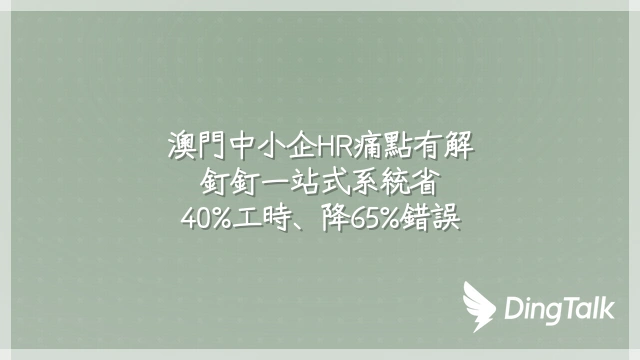
Why Traditional HR Processes Are Slowing Down the Growth of Macao's SMEs
Fragmented HR systems mean uncontrolled management costs, as data silos prevent seamless information flow, leading to delayed decision-making and increased compliance risks. According to the Labour Affairs Bureau's 2025 report, nearly 60% of local businesses have experienced employee disputes due to payroll calculation errors—this not only damages reputations but also potentially triggers labor-management conflicts.
The three major pain points persist over the long term: paper-based attendance tracking causes data delays; paper-based OA approvals take an average of more than 72 hours; and manual payroll calculations require aggregating data from multiple sources, significantly increasing the likelihood of errors. When companies use multiple independent systems (such as time clocks plus financial software), they create "data silos"—management can't instantly grasp overtime distribution or labor cost structures, often resulting in decisions lagging behind reality by one to two months.
For example, a manager at a chain restaurant brand confessed: "We didn't discover that a certain branch had overspent on overtime pay by 30% until the end of the quarter—but it was already too late to make adjustments." This kind of delay directly undermines corporate agility. Technically, it may just seem like "systems aren't connected," but commercially, it's tantamount to "losing monitoring capabilities."
The real solution lies in integrating all processes onto a single digital platform—allowing attendance data to automatically sync with OA approval results and then be immediately fed into the payroll module, without any manual intervention throughout the entire process. This isn't just about saving 15 hours—it's the starting point for HR teams to transform from transactional processors into strategic partners.
How DingTalk's One-Stop HR System Automates Attendance and OA Processes
Cloud-based time clock integration with dual GPS+WiFi positioning means eliminating proxy clock-ins, as the system can verify whether the actual location matches the preset workplace. For you, this translates into reduced potential losses each month caused by false attendance reports, especially making field staff management more transparent and reliable.
A multi-rule scheduling engine supports shift work, flexible hours, and cross-store assignments, meaning complex workforce scheduling can be completed in 30 minutes instead of three days, because the system automatically avoids conflicts and optimizes staffing allocation. After adopting this system, a Macao-based food service group saw a 65% reduction in incorrect work-hour claims and salary adjustment cases, and non-essential overtime expenses dropped by 30%.
Customizable approval templates (for overtime, compensatory leave, etc.) paired with real-time push notifications mean monthly approval times plummet from 72 hours to just 8 hours, as managers are no longer overwhelmed by fragmented requests. More importantly, the moment an employee submits a field request, the system instantly verifies the clock-in location against the reported destination; once the leave is approved, attendance records are automatically updated and trigger payroll calculations—one-time input, end-to-end workflow is a competitive edge that traditional systems simply can't replicate.
This capability of real-time data exchange lays a highly reliable foundation for the next stage: precise payroll calculation.
How to Seamlessly Connect Attendance and Approval Data to a Precise Payroll System
A unified data hub automatically aggregates attendance anomalies, leave requests, and overtime records, meaning payroll drafts can be generated within 24 hours, since manual entry errors are completely eliminated. Compared to the traditional payroll cycle that takes 3–5 days, companies can now achieve "real-time preparation for disbursement," dramatically improving financial planning efficiency.
A built-in Macao labor law logic engine (such as Law No. 7/2008) ensures that every overtime payment calculation complies with statutory multiples, as the system automatically identifies local holidays and contribution rules. The Mandatory Provident Fund (MPF) adjusts dynamically according to income brackets, ensuring that every payslip withstands audit scrutiny.
- Shorten payroll settlement cycles: From "waiting for complete data" to "real-time preparation for disbursement," finance departments gain early visibility into cash flow needs
- Avoid legal disputes: All calculations leave traceable records, compliance is built into the process, reducing the risk of complaints
- Improve financial forecasting accuracy: Labor cost fluctuations are systematically controlled, enabling more forward-looking budgeting
After adopting DingTalk's HR system, a Macao retail chain saw its error rate for 100 employees drop from 6.2 times per month to just 0.3 times—a savings of over 70 hours annually in manual review and dispute resolution costs. Precise payroll calculation isn't just an accounting optimization—it's a reflection of corporate credibility: when employees receive their salaries punctually every month without disputes, trust becomes an intangible asset for retaining talent.
Quantifying the ROI and Operational Benefits of Implementing DingTalk's HR System
Implementing DingTalk's one-stop HR system isn't an expense—it's a strategic investment that can recoup costs within six months, thanks to annual savings of HK$4,800 per employee (according to a 2025 study by third-party consultants). If you're still handling HR tasks manually, every mistake erodes profits and employee trust.
A 42% reduction in HR administrative hours means the HR team has an extra day each week to focus on talent development, as automation frees them from repetitive tasks. A 29% decrease in incorrect overtime payments directly cuts payroll overspending and compliance risks—especially critical in high-turnover industries like catering and construction.
A 18% drop in turnover stems from greater process transparency and improved responsiveness—when employees can check attendance anomalies and leave progress anytime, management fairness ceases to be just a slogan. Moreover, compared to the integration black holes caused by piecing together multiple SaaS tools, DingTalk's integrated platform saves at least HK$15,000 annually in maintenance and training costs.
The real return isn't just about how much money you save—it's about what opportunities you gain: faster decision-making, stronger employee relations, and greater operational flexibility. However, no matter how powerful the tool, successful implementation still depends on whether the strategy aligns closely with your business context.
Three-Step Implementation Path for Macao Businesses Adopting Integrated HR Systems
Many companies fail because they skip the "diagnosis" step and jump straight into system implementation—resulting in mismatched processes and tools, and employee resistance. According to the 2024 Asia-Pacific Human Resources Technology Report, among enterprises that go live without assessment, 68% struggle with adoption rates below 50%. Successful transformation must follow a three-step approach: "diagnosis → deployment → optimization."
Step 1: Use DingTalk's free HR Maturity Assessment Tool to conduct a current-state diagnosis, automatically identifying attendance anomaly frequencies and approval bottlenecks, and establishing a baseline. This ensures that subsequent deployments are data-driven and avoid blind investments.
Step 2: Activate modules based on business urgency—most companies choose to start with smart attendance or OA approval workflows, paired with tiered training programs to ensure an adoption rate above 85%. The key is "small steps, fast wins": first adapt to the consistency of a single module, then gradually integrate others.
Step 3: Establish a data feedback mechanism, turning weekly reports on absenteeism trends and process durations into actionable insights for management meetings. For instance, a Macao construction company completed phased rollout for 230 employees within three months, reducing payroll processing time from five days to eight hours, with no major operational disruptions.
Selecting DingTalk isn't just about buying a piece of software—it's about launching a data-driven HR upgrade revolution—making every clock-in and every approval become part of your company's managerial intelligence assets. Try the free assessment tool now and start your journey toward efficiency leaps.
DomTech is DingTalk's official designated service provider in Macao, specializing in providing DingTalk services to a wide range of customers. If you'd like to learn more about DingTalk platform applications, feel free to consult our online customer service, or contact us via phone at +852 95970612 or email at cs@dingtalk-macau.com. We have an excellent development and operations team, rich market service experience, and can provide you with professional DingTalk solutions and services!