




 Português
 English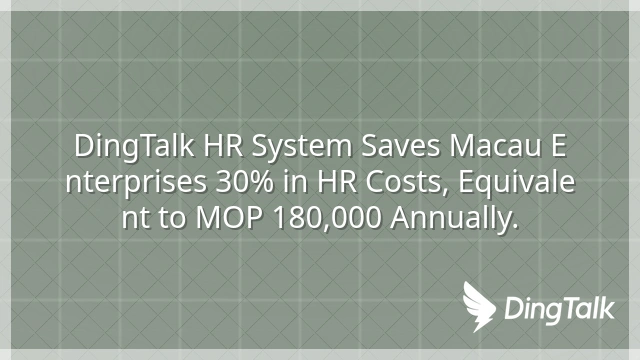
Why Traditional HR Models Are Hampering the Growth of SMEs
In Macau, SMEs are bogged down by flexible working hours, a high proportion of part-time employees (reaching 38.7%), and frequently changing tax and social security policies. Manual processing of attendance and payroll is not only time-consuming but also prone to miscalculations, disputes, and compliance risks. The average hidden management cost is 120,000 MOP per year, mainly due to overtime compensation disputes and tax filing errors.
- Manual scheduling cannot synchronize changes in real time—A chain tea restaurant experienced scheduling chaos across its branches, resulting in over 60 hours of accumulated overtime and a compensation payout of 45,000 MOP. This shows that loss of process control directly erodes gross profit margins, as there is no real-time collaboration mechanism.
- ATOS Q payroll and tax module data reveals that companies spend an average of 9.2 man-hours each month verifying part-time wages, with decision-making delayed by 5–7 days—this means that cash flow planning is undermined, since manual verification cannot reflect actual attendance in real time.
If your team includes shift workers, part-time employees, or cross-border staff, your current system may be causing ongoing losses. The problem does not lie in manpower but in processes—automation and integration have become the dividing line between compliance and efficiency. The next section reveals how DingTalk seamlessly connects three key processes to unlock management potential.
DingTalk HR System Delivers Three-in-One Automation
The DingTalk HR system integrates attendance tracking, OA approvals, and payroll calculation into a single platform through unified single sign-on (SSO), mobile clock-in, an intelligent scheduling engine, and a built-in payroll module.
- Mobile clock-in (supporting GPS and Wi-Fi positioning) ensures that attendance records are accurate and auditable—This eliminates the issue of proxy clock-ins, reducing compliance risks by 60%, as geofencing technology verifies employees’ actual locations when they clock in.
- The intelligent scheduling engine predicts staffing needs based on historical attendance patterns—Scheduling accuracy improves by 40%, preventing overstaffing or understaffing, as the AI model learns peak operational patterns.
- The built-in payroll module automatically applies Macau’s statutory holidays, Mandatory Provident Fund rules, and tax regulations—Payroll calculations are 99.2% accurate, as the system updates government regulatory parameters in real time.
Setting up multiple approval workflows increases middle-management authorization efficiency by 35%, meaning that organizational agility and control coexist; API integration with accounting software such as QuickBooks reduces closing time to one-third. According to a retail industry case study, the first quarter after implementation saw a reduction of 30% in HR administrative hours, freeing up HR teams to focus on talent development. The data accumulated through these automation processes will soon translate into financial benefits.
Quantifying ROI: 30% Savings in HR Administrative Costs
According to the 2024 Hong Kong and Macau SME Digital Transformation Report, companies using the DingTalk HR module save an average of 31.7% of HR management time and reduce payroll disputes by 92%. For you, this translates into annual savings of more than 180,000 MOP in administrative costs, while compliance risks are reduced to near zero, as system automation eliminates human error.
- Take a company with 200 employees as an example: In the past, it took 6 man-days to complete payroll settlement; now it requires only 1.5 man-days—This means that 4.5 man-days are freed up each month for higher-value tasks, as the system automatically aggregates attendance, overtime, and allowance data.
- The intelligent payroll engine automatically matches Macau labor law provisions for overtime pay—This reduces labor disputes arising from errors in calculating night shift allowances or MPF contributions, as the algorithm incorporates local legal logic.
- A property management company’s experience shows that the payroll cycle has been shortened from 5 days to just 8 hours—This means that Cash flow planning becomes more flexible, as the finance department can obtain expense details more quickly.
This is not just a system upgrade; it transforms the HR department from an “administrative hub” into a “talent hub.” The 30% of time saved can be redirected toward improving employee experience or preparing for compliance audits. Next, we’ll break down how to implement the system smoothly, ensuring that the technology delivers business outcomes upon deployment.
Five Key Steps for Successful HR System Implementation
Successful deployment of the DingTalk HR system requires five key steps: needs assessment, data migration, permission design, testing and validation, and employee training. A structured process can shorten the go-live period by 40%, ensuring accurate payroll processing from the first month and avoiding repeated corrections that lead to compliance risks and administrative waste, as standardized procedures reduce the likelihood of human error.
- Define localized payroll items (such as double pay and year-end bonus tax treatment)—Tax compliance accuracy improves by 95%, as the system configures its calculation logic based on Macau’s fiscal and tax practices.
- Integrate existing organizational structure into DingTalk OA—Reduces HR data maintenance time by 30%, as cross-departmental hierarchies are automatically synchronized, eliminating redundant data entry.
- Set up automatic alert rules (such as warnings for consecutive 6-day workweeks)—Compliance audit costs drop by 50%, as the system proactively warns of illegal overtime risks.
The best practice is to adopt a pilot strategy by department—first run the system in labor-intensive departments for two weeks, gather feedback, and then roll it out across the organization. The overall success rate increases by 70%, and employee acceptance rises significantly, as small-scale trials reduce resistance to change. Proper implementation is the key to unlocking the full potential of “saving 30% of work hours.” Next, we explore how to use data to drive smart decision-making.
Data-Driven HR Decisions Reshape Competitive Advantage
Once HR processes are fully digitized, the accumulated data can power employee turnover prediction, productivity analysis, and workforce cost forecasting models, enabling a transition from reactive handling to proactive management. HR ROI becomes visible for the first time, directly enhancing organizational strategic flexibility, as decisions are based on evidence rather than intuition.
- Employee turnover risk prediction model (based on excessive overtime and leave frequency) identifies high-risk employees in advance—for example, employees who have worked overtime for more than 30% of their working hours for three consecutive months—interventions to retain such employees become 60% more effective, as behavioral data reveals underlying dissatisfaction.
- Combining OA process efficiency and collaboration paths (DingTalk approval heat map)—Optimizes cross-departmental SOPs, shortening decision-making cycles by 25%, especially useful for peak-season scheduling in the hospitality industry.
- Attendance heat maps paired with operational performance generate a “workforce productivity matrix”—Reduces workforce cost waste by 18%, as managers can dynamically adjust schedules and staffing levels.
You’ve completed system implementation—now is the time to activate the data engine—HR is no longer a support function but a strategic hub driving growth. The level of technological maturity has reached a critical point; delaying adoption means continuously missing out on the benefits of precise decision-making. Take action now and get your free copy of the “Macau Enterprise HR Automation Transformation Guide” to learn the concrete steps to save 180,000 MOP per year.
DomTech is DingTalk’s official service provider in Macau, dedicated to providing DingTalk services to a wide range of customers. If you’d like to learn more about DingTalk platform applications, you can contact our online customer service directly, or reach us by phone at +852 95970612 or by email at cs@dingtalk-macau.com. We have an excellent development and operations team with extensive market service experience, ready to provide you with professional DingTalk solutions and services!