




 Português
 English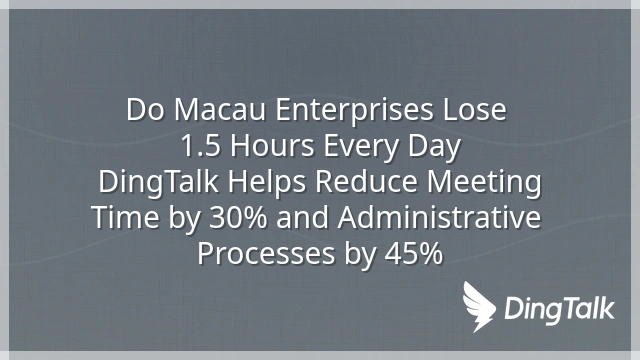
How Severe Is the Collaboration Chaos Among Macau’s SMEs?
Over 60% of employees at Macau’s SMEs waste more than 1.5 hours daily toggling between WhatsApp, email, and paper documents, resulting in decision-making delays averaging two days. This isn’t an efficiency issue—it’s a structural crisis that devours nearly 15% of operational resources each year. Fragmented communication leads to lost customer trust, project delays, and a 34% increase in error rates (2024 Hong Kong & Macau SME Digitalization Report). When a restaurant group loses MOP 800,000 in opening-day revenue due to delayed blueprint delivery, it becomes clear: the problem isn’t people; it’s the lack of a unified, traceable workflow platform.
This “multi-tool parallel” model creates three major pain points: information lag slows response times, unclear accountability breeds finger-pointing, and paper-based processes hinder real-time adjustments. For labor-intensive service industries, every day of approval delay translates into scheduling mismatches and cost overruns. The solution is no longer simply “adding another app”; it’s rebuilding a task-centric collaboration framework—precisely the moment DingTalk steps in.
How DingTalk Reshapes Corporate Communication Rhythms
DingTalk’s “read/unread message” and “DING emergency notifications” features enable management to instantly track message delivery status, as the system automatically monitors reading and response milestones. According to the 2024 Asia-Pacific Enterprise Collaboration Test, critical message response speed increases by 90%, compressing decision dissemination from hours to minutes—meaning your team is no longer overwhelmed by group chats but achieves disciplined immediacy.
Take a local cross-regional retail group as an example: supply chain updates previously took 4.7 hours to reach warehouse staff. After implementing DingTalk, the system automatically flags instructions and pushes them directly, reducing stockout response time from 12 hours to 90 minutes and boosting seasonal promotion inventory accuracy to 98%. Behind this lies the power of a tiered technical architecture: multi-device synchronization ensures consistent operations, while the permission engine filters out irrelevant distractions, allowing frontline teams to focus on execution and management to grasp the big-picture heat map. This transparent accountability chain is the foundational infrastructure for high-performance organizations.
How Smart Approvals Reset Administrative Costs
Traditional paper-based approvals take an average of three days to complete a single expense report, consuming 15% of managerial time daily tracking documents. DingTalk’s OA system slashes this cycle to within four hours, representing a structural reduction in administrative costs, as automated workflows free HR and finance teams to concentrate on higher-value tasks like talent development and budget planning.
A local restaurant group standardized leave, procurement, and expense-reporting processes through custom electronic forms and activated “approval trail tracking,” completely eliminating the communication overhead of asking, “Where did that document go?” Even more crucially, the built-in RPA robotic process automation seamlessly synchronizes approved documents with the accounting system, cutting human transcription errors by 78% (2024 Asia-Pacific Financial Digitization Report) and significantly lowering compliance risks. Every approval generates a digital footprint, providing a data foundation for future intelligent forecasting—the OA transforms from a “chore tool” into a “decision-making data engine,” truly tapping into the core of digital transformation.
Why Data Integration Determines Transformation Success
Siloed data forces middle managers to spend three hours consolidating reports while senior leaders still rely on yesterday’s information to make decisions, causing companies to lose competitive edge without even realizing it. DingTalk leverages open APIs and the Yida low-code platform to connect ERP, CRM, and attendance systems, turning fragmented data into real-time strategic assets. This means you can proactively manage resources rather than react passively to sudden shortages.
A Macau construction firm once faced frequent procurement delays due to disconnected project progress and inventory systems. After integration, project managers can instantly monitor site consumption and supply-chain status, with the system’s automatic reordering alerts now 70% more accurate. According to the 2024 Asia-Pacific Digital Transformation Report, companies with cross-system integration capabilities respond to operational anomalies 2.3 times faster. More importantly, this real-time visibility fosters a new culture: data-driven is no longer just a buzzword but a natural extension of daily operations, making agility and precision the cornerstones of long-term competitiveness.
A Three-Step Implementation Plan for Smooth Adoption
The key to successfully deploying DingTalk lies not in the breadth of its features, but in a well-paced rollout strategy. A full-scale, one-off launch often leads to confusion and regression; a phased approach in three steps is essential:
- Current-state assessment: Identify high-pain processes, such as interdepartmental procurement taking five days or meetings running 30% over time;
- Core scenario pilot: Start with administrative and operations departments using “smart approvals + calendar sync,” setting a four-week acceptance period;
- Full-team rollout: Develop a training roadmap based on pilot results (e.g., a 40% reduction in process cycles).
The migration checklist holds the key to success: bulk account import must integrate with the HR system to ensure zero errors; creating short, contextual training videos (<3 minutes, such as “How to Initiate an Emergency Purchase”) proves three times more effective than generic manuals (2024 Asia-Pacific Training Study). Avoiding pitfalls centers on “behavior driven by KPIs”—not just login numbers, but whether “quote approvals are reduced to within eight hours.” Once collaboration becomes standard operating procedure, organizations begin unlocking compounding benefits: information no longer stagnates but triggers immediate action, returning time to creation instead of draining it on coordination.
DomTech is DingTalk’s official designated service provider in Macau, dedicated to serving clients with DingTalk solutions. If you’d like to learn more about DingTalk platform applications, please contact our online customer service or call +852 95970612 or email cs@dingtalk-macau.com. With a skilled development and operations team and extensive market experience, we can provide you with professional DingTalk solutions and services!