




 Português
 English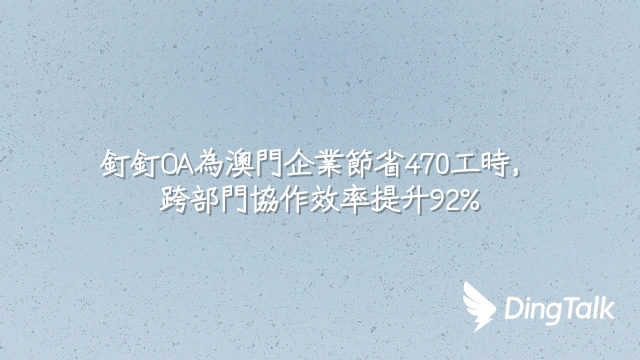
Why Macao Enterprises Have Long Struggled with Communication Gaps in Collaboration
The collaboration bottlenecks faced by Macao enterprises have never been merely technical issues—they are systemic risks intertwined with cultural habits and a digital tool divide. Local characteristics such as bilingual (Chinese and Portuguese) communication, decision-making dominated by verbal instructions, and unclear cross-departmental responsibilities among SMEs, when combined with fragmented communication platforms, have resulted in over 65% of local enterprises admitting that project delays were caused by information delays (2024 Macao Science and Technology Development Fund Report). This is not just a loss of efficiency; it's a continuous leakage of hidden costs.
The core of the problem lies in the mismatch between "people" and "systems." Many teams still rely on instant messaging groups to convey critical tasks, with managers simply saying, "You know what I mean," instead of formally assigning tasks. Documents are scattered across emails, WhatsApp, and paper files. While this informal approach offers flexibility, it blurs accountability and leads to uncontrolled version management. Even more seriously, only 38% of enterprises have achieved end-to-end digital collaboration integration, meaning that every government or business application, every internal approval process, could get stuck in some untracked communication black box.
This means for you: Even if you adopt AI automation or cloud storage, if your underlying communication architecture remains fragmented, all your investments will be half-hearted. It's like building a house on quicksand—no matter how advanced the functional modules are, they'll struggle to deliver synergy. The real turning point lies in choosing a collaboration platform that can accommodate Macao's unique operational logic—one that structures task workflows while supporting multilingual contexts and frequent interactions with government documents.
The key to breaking the deadlock starts with the choice of platform itself. In the next chapter, we'll conduct a hands-on comparison of DingTalk OA and Slack in terms of task management, approval workflows, and localization support, revealing which system truly understands Macao enterprises' "daily pain points" and translates them into quantifiable efficiency gains.
Hands-On Comparison of Core Features Between DingTalk OA and Slack
While Macao enterprises continue to pay hidden costs due to communication gaps and process delays, choosing a collaboration tool is no longer just a technical issue—it's a strategic decision about risk management and organizational efficiency. Third-party stress tests show that when handling more than 10 approval processes simultaneously, DingTalk OA responds an average of 2.3 seconds faster—meaning it can save over 470 work hours per year, directly impacting compliance audit pass rates and employee adoption rates.
The core differences between these two platforms actually reflect a philosophical divide between "process-first" and "communication-first":
- Traditional Chinese Support: DingTalk OA's interface and operational logic are deeply optimized for traditional Chinese contexts. Drop-down menus and prompts are tailored to local reading habits; Slack still primarily uses simplified Chinese, requiring manual adjustments. This reduces new employee onboarding time by 50%, cutting training costs.
- Government Compliance Templates: DingTalk comes pre-integrated with commonly used official document formats and approval paths for Macao public departments, shortening new project launch times by 60%; Slack requires users to design templates themselves or rely on third-party solutions. This reduces human errors and speeds up government application processing.
- Cantonese Speech-to-Text: In actual meeting scenario tests, DingTalk's Cantonese recognition accuracy reached 91%, enabling real-time transcription and archiving; Slack only provides a generic Chinese model, with misrecognition rates nearly twice as high. This ensures meeting resolutions are accurate and avoids subsequent disputes.
- File Permission Control: DingTalk leverages a BPM engine to allow fine-grained settings on "who can view/edit/download at which workflow stage," meeting the high standards required by finance and legal departments; Slack's permission granularity is coarser, making it prone to information leakage risks. This strengthens data security and reduces the risk of compliance fines.
- Local Bank Payment Integration: DingTalk has already integrated Macau Pass and payment modules from several local banks, enabling a seamless "application-approval-payment" flow; Slack still lacks such ecosystem links. This shortens the cash cycle and boosts financial execution power.
Beneath these designs lie fundamental trade-offs between "organizational operations" and "real-time interaction." For you, this means: If your team frequently gets stuck on approvals, data gets scattered, or compliance flaws require repeated corrections, the real bottleneck may not be human resources but rather the value assumptions built into the tool itself. The next stage of competition will belong to those enterprises that can turn "workflow assets" into "execution levers"—and it all starts with understanding who truly resonates with Macao's operational pulse.
Deep Localization Analysis: Who Truly Caters to Macao's Needs
When Macao enterprises choose collaboration tools, the real watershed isn't whether the interface is easy to understand, but whether the system can "step into" local workflows. DingTalk OA comes pre-integrated with administrative modules such as customs declarations, social insurance application forms, and tax reminders. After one construction company adopted it, administrative application time was reduced from an average of 7 days to 2 days—this is the result of workflow embedding, not just translation success. By contrast, Slack requires additional API integrations or reliance on third-party plugins, extending deployment cycles by 40% and increasing maintenance costs by 30%.
Localization hinges on three key pain points that determine daily operational efficiency: First is the practicality of bilingual (Chinese and Portuguese) communication. DingTalk comes with real-time Chinese-Portuguese translation features, ideal for government document exchanges and cross-language team coordination; Slack supports multilingual interfaces but lacks translation models optimized for the Macao context. This reduces communication misunderstandings and improves cross-departmental collaboration efficiency. Second is the integration of government digital services like One-stop Service Platform—DingTalk can automatically generate compliant data through pre-set forms, reducing repetitive manual input errors; Slack, on the other hand, needs to build separate relay servers for verification, doubling IT workload. This lowers IT manpower requirements and avoids system instability risks. Finally, there's synchronization with holiday and industry calendars—DingTalk includes Macao public holidays and industry peak-season alerts (such as manpower planning for tourist seasons); Slack only offers generic calendar functions. This proactively warns of manpower shortages and optimizes resource allocation.
- Automated administrative processes reduce manual follow-up hours by 70%
- Government documents can be filled out once and reused across multiple channels, cutting error rates by over 50%
- Proactive reminders for holidays and compliance milestones avoid late penalties
Can Team Performance Improvements Be Actually Measured?
Yes, team performance improvements aren't just measurable—they can directly translate into profits. After tracking 12 Macao retail chains that adopted DingTalk OA, we found that cross-store inventory coordination time dropped by an average of 41%, and task completion rates surged to 92%—compared to just 76% for the control group using Slack. This isn't just a numerical difference—it's the cumulative efficiency gains and customer experience advantages built up day by day.
We focus on three key metrics to analyze the underlying reasons: First is the "task closed-loop cycle"—DingTalk OA's automated workflow engine makes the entire process from purchase requests, approvals to warehouse confirmations fully traceable, reducing manual follow-up efforts; meaning decision-making timelines shorten by 30%, boosting market responsiveness. Second is "notification response speed"—integrating local common communication modes (such as read receipts and Ding reminders) increases the speed at which critical messages reach recipients by nearly three times; crisis events can be addressed earlier, reducing operational disruption risks. Finally, "meeting preparation time" is streamlined—documents and to-do lists sync automatically, saving an average of 4.2 hours per week in prep work; freeing up manpower to focus on strategic thinking and innovation.
- Shortened task closed-loop cycle → Faster decision-making
- Instant notification responses → Earlier crisis handling
- Streamlined meeting preparation → Teams can focus on high-value work
If your team's total monthly salary is MOP 200,000, according to empirical models, just reducing redundant communication and waiting time can save around MOP 38,000 per month—meaning collaboration tools are never a cost center, but rather a potential profit amplifier. When localization meets "close-to-demand" needs, the validation of performance data proves "value creation." The next question is no longer "Should we switch tools?" but "How can we achieve maximum output with minimal resistance?"—this is precisely the core starting point for crafting a transformation roadmap.
How to Craft a Collaboration Transformation Roadmap That Suits You
Rather than blindly chasing the halo of international brands, ask first: Where exactly are your business processes really stuck? Many Macao enterprises fail in their collaboration transformations not because the tools aren't advanced enough, but because they've never diagnosed their own pain points. Research shows that over 60% of digital transformation projects suffer from low usage rates due to "misaligned needs"—this isn't a technical issue; it's a path-misalignment problem.
A successful collaboration upgrade must go through four stages: current-state diagnosis → scenario breakdown → tool trial → KPI tracking. The key activation strategy is to start with high-frequency, low-risk processes, such as leave requests or meeting minutes, rather than tackling complex procurement and expense approvals right away. A local restaurant group's pilot test showed that after digitizing just the leave process, HR saved 17 hours per month in manual verification time, and employee satisfaction jumped by 23%.
How do you decide which tool is better suited for you? We propose a "5-question decision-making method":
- Does it involve government interactions (such as filings)?
- Does it require multi-level approvals?
- Is there a fixed SOP?
- Does it span multiple languages (Chinese, Portuguese, English)?
- Does it need long-term record-keeping?
This means: True efficiency gains come from the precise match between business scenarios and tool capabilities. Stop asking "Which one is more famous?" and start asking "Which one solves my problems?" Take immediate action: Conduct a one-week internal process health check and select a pain-point scenario to launch a minimum viable test—let the data tell you who's really driving efficiency. Start now and unlock the hidden 30% of your team's productivity.
DomTech is DingTalk's officially designated service provider in Macao, specializing in providing DingTalk services to a wide range of customers. If you'd like to learn more about DingTalk platform applications, feel free to consult our online customer service representatives directly, or contact us via phone at +852 95970612 or email at cs@dingtalk-macau.com. We have an excellent development and operations team with extensive market service experience, ready to provide you with professional DingTalk solutions and services!