




 Português
 English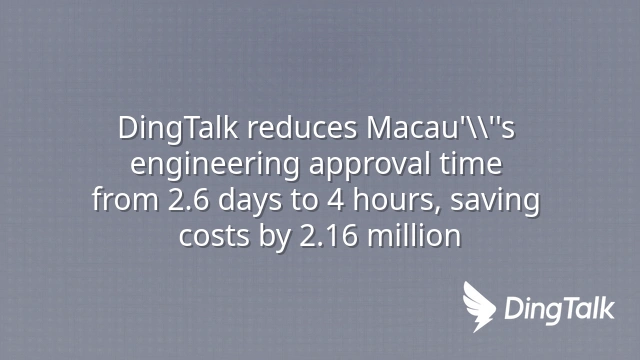
Why Site Information Is Always Three Days Behind
The average construction project in Macau experiences a 18% delay, not due to worker inefficiency, but because of a systemic breakdown in information flow. According to the Statistics and Census Service’s 2024 report, over 70% of construction sites still rely on paper records and verbal handoffs, resulting in change orders being implemented an average of three days late—meaning you lose nearly half a day of productive work each week and incur an additional 12% in labor allocation costs.
Outdated technology forces decision-making based on stale data, as site issues may take anywhere from six to nine hours to reach management. When supervisors base today’s decisions on yesterday’s information, risk becomes embedded in the process. This “decision lag” directly increases the likelihood of budget overruns and undermines bidding credibility.
DingTalk’s real-time communication and workflow integration capabilities can reduce approval cycles from an average of 2.6 days to within four hours, as all stakeholders receive simultaneous updates and task reminders. This isn’t just faster communication—it marks a critical shift from reactive firefighting to proactive control.
Why Material Tracking Often Fails On-Site
The root cause of material tracking failures isn’t operator negligence, but rather the reliance on Excel spreadsheets and verbal reporting, which lack real-time verification mechanisms. In one integrated resort expansion project, a delayed rebar delivery went unreported, halting operations for two weeks and resulting in over MOP$8 million in direct losses. Such delays aren’t merely subject to fines; they silently freeze working capital.
Indirect administrative time accounts for as much as 65% of total material control effort, meaning site supervisors spend 11 hours per week verifying delivery notes, repeatedly calling suppliers, or reconciling different versions of Excel lists. These non-value-added activities drain strategic energy that could otherwise be devoted to supply chain optimization.
By leveraging DingTalk to achieve end-to-end material visibility, every scan-and-sign-off triggers immediate progress updates and financial alerts, as the system automatically synchronizes status across all collaborating parties. This eliminates information silos and reallocates hundreds of hours previously spent on crisis management toward value-creating tasks.
How DingTalk Rebuilds Construction Collaboration Frameworks
DingTalk is not just another communication tool; it employs a four-pronged approach—group collaboration, custom forms, approval workflows, and IoT integration—to replace fragmented WhatsApp chats and isolated systems. Previously, a single material requisition required manual transcription by five individuals, took 72 hours to complete, and carried a 30% error rate. Today, through DingTalk’s integration with local ERP APIs (such as UFIDA), data entry errors have been reduced by 70%, as systems can communicate and validate information instantly.
Subcontractors, supervisors, and general contractors now update information simultaneously within the same environment, reducing dispute resolution time from days to hours, thanks to real-time document and progress sharing. For example, in one project, the MEP and civil engineering teams once halted work for two days due to misaligned sequencing; after implementation, similar issues never resurfaced.
All approval nodes and decision trails are systematically recorded, transforming compliance audits from post-event patchwork to real-time verifiability, as every action leaves a timestamp and clear accountability. This provides robust support for contract fulfillment in large-scale bids while enhancing overall competitiveness.
Quantifying Operational Efficiency Gains From DingTalk
After adopting DingTalk, one sample company saw document approval cycles shrink from 5.2 days to 3.1 days, saving 22 hours of monthly follow-up work per project as automated tracking replaced repetitive communication and paper-based confirmations. This improvement isn’t just about efficiency—it’s about moving risk mitigation upstream.
Simulating a MOP$120 million, 12-month project reveals that real-time collaboration and automated tracking can reduce total costs by approximately 1.8% (MOP$2.16 million) by proactively addressing 73% of potential delays through transparent information flows. These savings stem from preemptive risk intervention, not compromised quality.
Management receives consolidated daily progress summaries spanning multiple sites, enabling high-level decisions to shift from reactive firefighting to strategic resource allocation. Resource deployment becomes more precise, and the ability to respond to unexpected changes significantly improves.
How To Phase-In DingTalk Into Existing Processes
The key to successful DingTalk adoption lies in targeted implementation rather than wholesale replacement. If your site personnel continue to manually fill out reports and rely on verbal approvals, each progress update will consume half a day just to verify details—stalling efficiency and potentially sparking contractual disputes. Benchmark projects have already cut routine approvals from eight hours to 45 minutes within 45 days, and this is precisely the starting point you can replicate.
- Establish an Internal Steering Committee: Comprised of site managers and IT representatives to ensure technical deployment aligns with on-site workflows, preventing system disconnects that lead to abandonment.
- Define Standard Operating Templates: Standardize forms for safety inspections, material requests, and other processes to minimize cross-team misunderstandings and directly reduce dispute risks and rework costs.
- Set Up Management Dashboards: Aggregate real-time data on site delays and pending approvals so decision-makers can proactively allocate resources and maintain operational control.
- Conduct On-Site Training Sessions: Use Cantonese-language instructional videos and one-on-one guidance to lower the learning curve, boost adoption rates, and ensure that investment translates into tangible results.
Strategic tip: Begin with a pilot project that senior management prioritizes. According to a 2024 Asia-Pacific construction digitalization case study, this approach accelerates subsequent rollouts by more than twofold. Launch a minimum viable product (MVP) right away—even if it starts with a simple “daily site safety snapshot.” Each small validation serves as a leverage point for driving organization-wide transformation.
DomTech is DingTalk’s official designated service provider in Macau, specializing in providing DingTalk services to a wide range of clients. If you’d like to learn more about DingTalk platform applications, please feel free to consult our online customer service, or contact us by phone at +852 95970612 or via email at cs@dingtalk-macau.com. With a highly skilled development and operations team backed by extensive market experience, we’re ready to deliver professional DingTalk solutions and services tailored to your needs!