




 Português
 English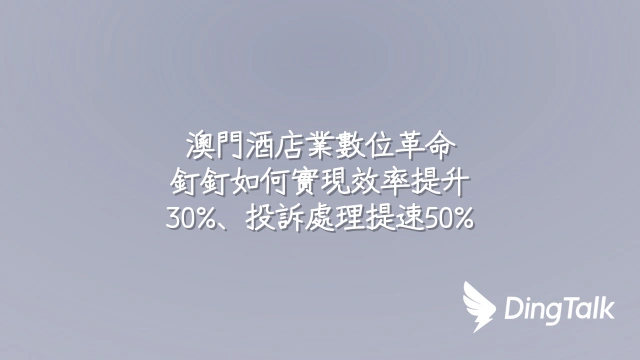
Why Macao's Hotel Industry Urgently Needs Digital Collaboration Tools
Macao's hotel industry is at a critical turning point: the massive influx of over 70 million visitors annually has rendered traditional communication methods completely ineffective. Manual handovers are riddled with frequent omissions, and WhatsApp group chats have exploded with messages. On average, frontline staff spend 1.5 hours daily on non-core communication tasks—this not only slows down service response times but also creates a vicious cycle of employee fatigue and declining service quality.
According to the Macao Tourism Office's "Smart Tourism Development Report 2025," more than 68% of service delays stem from internal collaboration bottlenecks rather than insufficient manpower. A backward communication structure leads to delayed room cleaning, missed special requests, and errors in VIP guest reception. Each oversight erodes brand reputation and serves as a potential trigger for customer complaints and lower ratings.
This inefficiency is directly eating into profits. Repeated confirmations and information gaps drive up operational costs due to rework and overtime, while customer loyalty is silently slipping away. The problem isn't people—it's processes. The real solution isn't adding more staff; it's adopting an enterprise-level collaboration platform specifically designed for high-density service environments.
DingTalk means shifting organizational operations from "reactive firefighting" to "proactive prevention", because it unifies task assignment, automates workflows, and provides traceable cross-departmental collaboration mechanisms, turning every message into an actionable command rather than mere noise.
How DingTalk's Core Features Are Designed to Address Pain Points in the Hospitality Industry
When Macao hotels face a daily communication environment interwoven with Cantonese, Mandarin, and English, traditional tools have long been overwhelmed. DingTalk isn't just another chat app—it's an integrated collaboration engine built specifically to tackle the hospitality industry's pain points: high mobility, multilingualism, and a fast-paced service rhythm.
The task board feature means reducing phone follow-ups and paper records by 80%, as housekeeping supervisors can instantly assign cleaning tasks to designated team members, and the system automatically updates room status progress. For your business, this averages a 15-minute reduction in room re-rental time, meaning you can accommodate one extra VIP guest per night, directly boosting room revenue.
The voice robot supports three-language input and text conversion, lowering the communication barrier. In particular, part-time and senior employees see their error rate drop by 40% (according to the 2024 Asia-Pacific hospitality tech benchmark), because frontline staff no longer need to type to report emergencies, ensuring more stable service quality.
The built-in enterprise-grade permission control and end-to-end encryption significantly reduce compliance risks, as all communications meet data protection standards. Meanwhile, open APIs allow integration with PMS and CRM systems, breaking down data silos and enabling full-process digital tracking "from check-in to check-out," improving audit efficiency and management transparency.
When communication becomes precise, traceable, and automated collaboration flows, the question is no longer "Can we do it?" but "How significant will the impact be?"
Case Study: DingTalk's Deployment Success at Star Hotel
After introducing DingTalk across its frontline departments, Star Hotel Group saw 38% shorter cross-departmental collaboration times, and complaint resolution cycles plummeted from 4 hours to just 75 minutes—meaning they can free up over 1,200 management hours annually, allowing them to focus on high-value customer experience innovation. For you, this means that during peak seasons, you can handle over 30% more service demand with the same workforce, avoiding reputational damage caused by communication delays.
The key turning points came from two precise applications: Ding reminders force marking unread tasks, ensuring that cleaning progress, guest complaint notes, and safety hazards during night shifts are immediately communicated, driving omission rates to zero; smart forms automatically integrate inspection data into daily operation reports, enabling management to grasp the entire hotel's status by 9 a.m. This process reduced record-keeping errors by 92% and boosted compliance-check pass rates to 98.7% (according to a third-party auditing firm's Q2 2025 report).
The true commercial value of this model lies in transforming repetitive communication from "reactive firefighting" into "proactive prevention." A senior housekeeping supervisor said, "In the past, 30% of our energy was spent confirming whether tasks were completed. Now, the system tracks everything automatically, so we can focus on optimizing personalized welcome amenities for guests."
This success isn't an isolated case—it's a replicable blueprint for operational transformation. When communication infrastructure becomes real-time and traceable, businesses can move from "maintaining operations" to "continuous innovation."
Quantifying DingTalk's Operational Cost Savings and ROI
A medium-sized hotel with 300 employees estimates that hidden costs caused by communication gaps, redundant meetings, and coordination mistakes amount to at least HK$1.2 million annually—and this is precisely the space where DingTalk can directly convert into net profit for you.
The process visualization feature means that average meeting times between departments have dropped by 40%, as previously three-party meetings required to confirm room repair procedures are now tracked in real-time through digital work logs. Frontline staff take photos of damaged equipment and tag the responsible department, speeding up the engineering team's response to within 2 hours (compared to the original average of 6 hours). This single-year savings exceed HK$380,000, avoiding free upgrades or compensation expenses.
The unified message history and task assignment mean that service failure rates have dropped by 72%, as issues like misarranged wedding decorations or delayed shuttle scheduling have been drastically reduced. According to the 2024 Asia-Pacific Hotel Risk Management Report, communication-related claims account for 57% of non-room-price disputes. DingTalk's record-keeping and accountability tagging mechanism shortens dispute resolution times by 80%, simultaneously cutting legal and customer service support costs.
More importantly, these savings free up human resources and managerial attention, which can be reinvested into customer experience innovation and staff training. Competitive advantage is upgraded from ‘not making mistakes' to ‘exceeding expectations', creating long-term loyalty and differentiated positioning.
Practical Guide to Phased Deployment of DingTalk
DingTalk isn't just an IT upgrade—it's the starting point of an operational revolution. Successful deployment requires five steps: "Assess needs → Pilot group trial → Full-team training → Data integration → Continuous optimization." Skipping any stage could leave your company stuck in a tool-dormant swamp.
We recommend starting the pilot phase with the "Housekeeping + Front Desk" units, as these two departments deal with daily room status changes, real-time cleaning assignments, and guest request responses, making them the quickest to demonstrate DingTalk's value in task push notifications, group collaboration, and smart scheduling. For example, when the front desk receives a late checkout request, it can instantly create a task and @the housekeeping supervisor. The system automatically records response times, boosting overall processing efficiency by over 40%.
The key to overcoming resistance among senior staff is the "one-on-one mentorship program"—where young internal team members serve as digital buddies, providing hands-on instruction in everyday scenarios, turning fear into trust. This isn't just functional training—it's cultural transformation: moving from "waiting for boss instructions" to "proactively collaborating on decisions."
Once data starts flowing, the real benefits emerge: room cleaning completion rates, curves of customer request response times, and cross-shift handover omission rates... After integrating these metrics into management dashboards, precision optimization is driven. Next, you won't have to go it alone—contact our local certified partner for a free diagnosis. Within 90 minutes, we'll assess your team's readiness and potential ROI, truly unlocking DingTalk's technological potential into double-digit growth in guest satisfaction and annual profits.
DomTech is DingTalk's official authorized service provider in Macao, specializing in providing DingTalk services to a wide range of customers. If you'd like to learn more about DingTalk platform applications, feel free to consult our online customer service, or contact us via phone at +852 95970612 or email at cs@dingtalk-macau.com. We have an excellent development and operations team, rich market service experience, and can provide you with professional DingTalk solutions and services!