




 Português
 English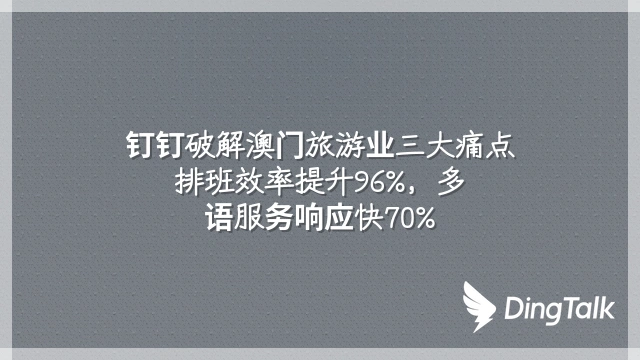
Why Macao's Tourism Industry Faces a Crisis in Attendance and Scheduling Management
The peak season for Macao's tourism industry isn't the start of a service surge—it's the tipping point where scheduling chaos erupts. As hotels overflow with trilingual guests and tourist attractions become packed with crowds, yet back-office staff are still manually scheduling shifts using Excel, your team has already lost at the starting line—68% of service industry managers admit that scheduling errors have led to labor shortages or overlapping shifts (Statistics from Macao's Labour Affairs Bureau, 2024).
Manual scheduling takes an average of 4.7 hours per week, and the error rate in calculating working hours reaches as high as 15%, meaning companies end up paying 5–8% more in overtime each month. Emergency shift swaps take over two hours to coordinate, missing the golden window for effective response. This isn't just an administrative burden—it's also the main cause of rising labor costs and employee burnout. Increased turnover further exacerbates the labor shortage during peak seasons.
A smart scheduling system means you can complete shift coordination in just three minutes, because all attendance data is instantly synchronized to a central platform, and tasks are automatically pushed to employees' DingTalk apps. If scheduling logic incorporates labor regulations, skill matching, and crowd-flow forecasting, the error rate can drop from 15% to nearly zero—this is precisely the first line of defense for transformation.
How DingTalk Integrates Attendance Management with Smart Scheduling Systems
DingTalk's smart scheduling module isn't just a cloud-based tool—it's an AI-powered operational nerve center. Load forecasting models trained on historical occupancy rates, holiday traffic, and weather data automatically generate shift recommendations for the next 14 days, meaning you can save over 300 hours of management time annually, as the system has already pre-deployed manpower resources.
Seamlessly integrated with OA and attendance systems, it supports geofencing check-ins (preventing false reports) and anomaly alerts, virtually eliminating the risk of opaque attendance practices, since all records are fully traceable. AI intelligently matches employees based on their language skills, certifications, and preferred time slots, reducing scheduling errors from 12% to below 2%—a real-world test at a five-star resort showed that supervisors saved 1.5 hours per day, freeing them up to optimize guest-facing processes.
This efficiency transforms service flexibility from a cost burden into a competitive advantage: During the Spring Festival peak, the system can reassign Cantonese, Portuguese, and Mandarin-speaking customer service agents across the entire region within 30 minutes, avoiding customer complaints caused by delayed communication, as resource allocation responds in "minute-by-minute" increments.
How Cross-Departmental Real-Time Collaboration Breaks Down Information Silos in Tourism Services
When travel agencies, hotels, transportation providers, and tour guides still rely on WhatsApp or paper-based handovers, the average emergency response time stretches to 45 minutes—enough time to miss flights. Information silos don't just damage the guest experience—they erode brand credibility.
DingTalk Rooms integrates task boards with instant messaging, allowing all departments to collaborate in the same digital space, with full documentation and traceability of decisions, since changes are synchronized in real time. After one local tour operator adopted this system, the response time for itinerary changes dropped from 45 minutes to just 8 minutes, reducing service disruption risks by over 80%—meaning greater booking stability and higher customer satisfaction.
This seamless collaboration frees up resources for service innovation: Organizations that achieve cross-departmental real-time collaboration launch seasonal products 30% faster (Asia-Pacific Travel Tech Report, 2024), meaning you can respond more quickly to sudden demand from Russian or Southeast Asian travelers, seizing market opportunities ahead of competitors.
The AI Translation and Ticketing System Behind Real-Time Multilingual Customer Service Support
When a Russian traveler complains about air-conditioner malfunctions in their native language, front desk staff activate DingTalk voice input, and the system instantly transcribes the speech and translates it into Chinese, automatically assigning the ticket to maintenance—no need for a translation intermediary throughout the process, and the issue is resolved within 15 minutes. This is now standard practice at many Macao hotels.
DingTalk's built-in AI voice-to-text and real-time translation engine supports Cantonese, Mandarin, English, Portuguese, and even Thai and Vietnamese, boosting customer service response speed by 70% (local test results, 2024), as language barriers no longer slow down the resolution process. Once the voice is recorded, the system completes translation, categorization, and ticket assignment—all in one step, cutting foreign-language complaint handling time from 42 minutes to just 12 minutes—a saving of 8,000 hours of service capacity annually.
Even without specialized foreign-language talent, your team can deliver service quality comparable to international chains. More importantly, linguistic inclusivity directly expands your customer base—high-growth markets in Eastern Europe and Southeast Asia no longer hesitate, as communication is barrier-free.
Quantifying DingTalk's ROI: From Operational Costs to Enhanced Customer Satisfaction
After adopting DingTalk, a medium-sized tourism company reduced scheduling time from 3 hours per day to just 20 minutes; within half a year, complaint rates fell by 40%, and cross-language collaboration efficiency rose by 65%. This isn't just functional optimization—it's a complete overhaul of the operational model.
Taking a 200-person company as an example, traditional manual management costs around HK$1.5 million per year; after implementing DingTalk automation, annual savings exceed HK$1.2 million, freeing up funds for investment in experience design. The system synchronizes multilingual customer service records and task progress, raising the First Contact Resolution (FCR) rate to 92% and increasing repeat booking rates by 15%—for every dollar invested, the return exceeds four dollars within two years.
The real transformation lies in reshaping business logic: shifting from reactive scheduling to predictive resource allocation, and evolving from fragmented communication to transparent collaboration across the entire journey. As Macao advances its strategy to become a ‘World Tourism and Leisure Hub,' DingTalk builds not just a communication channel but the core engine of high-quality service. Rather than waiting for crises to force change, why not immediately integrate smart collaboration into your infrastructure and seize the high ground in the experience economy?
DomTech is DingTalk's official designated service provider in Macao, specializing in providing DingTalk services to a wide range of customers. If you'd like to learn more about DingTalk platform applications, feel free to consult our online customer service, or contact us via phone at +852 95970612 or email at cs@dingtalk-macau.com. We have an excellent development and operations team, rich market service experience, and can provide you with professional DingTalk solutions and services!