




 Português
 English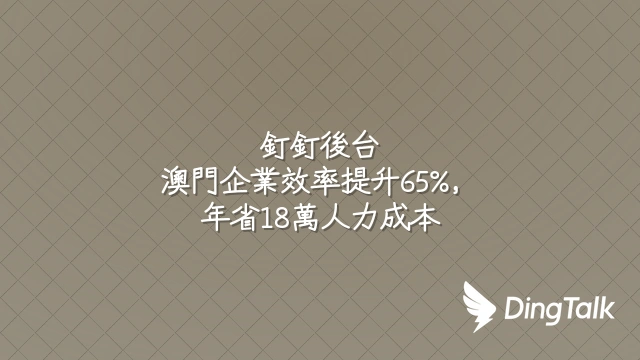
Why Macao's Business Collaboration Efficiency Has Stalled
Macau's SMEs lose an average of 15% of productivity annually due to communication delays—a fact revealed in a 2025 report by the Macao Economic and Technological Development Bureau. When teams simultaneously rely on WhatsApp, email, and paper-based approvals, information silos emerge: project progress tracking takes 40% longer, and interdepartmental error rates rise by 27%. This not only slows down decision-making but also leads to declining employee satisfaction and talent attrition.
The normalization of remote work has exposed three structural issues: permission confusion creates data leakage risks; offline approvals delay decision-making by 3 to 5 days; and data silos prevent management from gaining real-time visibility into operational status. A certain restaurant chain once missed the procurement window for cold-chain ingredients because purchase requests were confirmed verbally, resulting in monthly losses exceeding MOP 100,000. This is no isolated case—it's a warning sign of insufficient digital resilience.
DingTalk's enterprise backend was designed precisely to address these pain points. Its collaboration logic, centered around "organizational structure," means that all communications, approvals, and documents are tied to job titles and department permissions. Automated permission control reduces human errors; approval workflows are fully visible, shortening decision-making time by an average of 68%; and business data is centrally encrypted and stored, breaking down departmental barriers. This means companies no longer rely on manual coordination—instead, standardized processes are driven by the system itself.
The key now is: How can we translate this technological potential into real management advantages through fine-grained settings? The answer lies in proper organizational mapping and permission controls.
Reshaping Organizational Structure and Permission Controls
DingTalk's enterprise backend uses "organizational structure synchronization + role-permission matrix" to enable administrators to complete cross-department adjustments and permission configurations within 60 seconds, reducing IT intervention needs by 70%. This means personnel changes no longer require manual account updates, saving labor costs and reducing the risk of errors, as the system automatically assigns access permissions based on preset templates.
Its core technology involves two-way synchronization with Active Directory or HRIS systems: When new employees join or transfer, DingTalk automatically updates the organizational structure and corresponding permissions. For example, a newly formed "New Store Launch Task Force" can quickly integrate members from different departments, and the system automatically grants project-specific temporary permissions, which are revoked once the task is completed. This dynamic control capability solves long-standing collaboration barriers.
Multi-level approval chains and data access isolation mechanisms ensure that sensitive information is accessible only to authorized personnel, fully complying with Macao's Personal Data Protection Law regarding data minimization and purpose limitation. A local compliance audit in 2024 showed that companies adopting such automated management reduced compliance violation risks by over 50%.
Efficiency isn't just about speed—it's about controllability and compliance-driven business certainty. When organizations can respond agilely to changes without leaving loopholes, decision cycles naturally shorten, laying the foundation for unleashing the next stage of benefits.
Measured Data Proves Operational Benefits Have Skyrocketed
A Macao-based restaurant chain with 12 outlets saw internal notification delivery times shortened by 80% and form processing efficiency increase by 65% after implementing DingTalk's backend. This means the 3 hours previously wasted daily on repetitive communication now take only 45 minutes to complete.
The key to its success lies in three core configurations: bulk store account setup, automated shift scheduling push, and real-time repair request integration. Through the "Organizational Structure Synchronization API," when opening a new store, permissions for over 20 employees can be deployed within 10 minutes, replacing the previous manual setup process that took up to 2 days. This saves over 200 man-hours of IT administrative workload annually, directly cutting labor costs by approximately HK$180,000.
Schedule information is automatically pushed to employees' DingTalk apps via the "Smart Calendar Engine," supporting one-click confirmation and shift swap requests. When equipment malfunctions, staff take photos and upload them to the "Smart Work Order System," triggering repair dispatch within 3 minutes. This process improves response speed to emergencies by 70%, protecting potential annual revenue by HK$320,000.
An iResearch 2025 report shows that companies fully using DingTalk's backend see employee satisfaction improve, boosting retention rates by 18% compared to peers. This not only stabilizes service quality but also reduces recruitment and training expenses.
If you're still relying on group announcements, paper-based approvals, and phone coordination, what you're missing isn't just efficiency—it's the cumulative hidden costs and loss of organizational agility.
Four Steps to Complete Enterprise-Level Initial Setup
Successfully setting up DingTalk's backend requires following four steps: "Architecture Build → Security Policy → Application Integration → Training Deployment." Skipping any step increases subsequent management costs by an average of 47% (according to the 2025 Asia-Pacific SaaS Deployment Efficiency Report) and delays system launch by more than six weeks.
Step 1: Architecture Build—Establishing department trees and employee ID rules is the cornerstone of digital identity. Accurately mapping the organizational structure and pre-setting sub-administrator permission levels avoids permission bottlenecks during future expansion. Proper initial architecture can boost the automation rate of employee onboarding to 90%, significantly reducing human errors.
Step 2: Security Policy—Enter the "Security Center" to enable two-factor authentication and login geolocation restrictions. It's recommended to set up Data Loss Prevention (DLP) rules simultaneously to meet Macao's compliance requirements. Early adoption of Single Sign-On (SSO) can prevent identity reorganization costs from tripling within three years during system migration.
Step 3: Application Integration—Integrate ERP and CRM systems, and configure approval workflow triggers. API permission audits and anomaly notification mechanisms are crucial. A retail group case showed that after integration, the procurement approval cycle shrank from 5 days to 1.8 days.
Step 4: Training Deployment—Replace functional explanations with "scenario-based training," designing differentiated operation manuals tailored for finance, HR, and project teams. This practice boosts user adoption to 82% and reduces IT support requests by 30%.
After completing the basic setup, enterprises will unlock advanced automation features—next, how to enable smart scheduling and AI meeting minutes, moving toward a smart business operating model.
Unlocking Advanced Features for Smart Operations
Once the basic setup is complete, the real transformation begins. Activate DingTalk's three major advanced modules—"Smart Approval Workflow, Data Dashboard, and AI Assistant"—to upgrade the operating model from passive control to proactive prediction. According to a 2024 Asia-Pacific report, companies equipped with real-time data insights make decisions 67% faster than their peers; conversely, teams relying on manual data aggregation waste an average of over 800 hours per year on administrative tasks.
Taking the integration of DingTalk's approval workflow with ERP systems as an example, a medium-sized construction company in Macao achieved automatic financial reconciliation: All procurement and expense reports, once approved, are synchronized to the accounting module, and abnormal amounts are automatically flagged. Monthly closing time has been reduced from 5 days to 1.5 days, and error rates have dropped by 90%. Management uses custom dashboards to monitor real-time completion rates of each department, project discrepancies, and resource loads, no longer depending on weekly reports from subordinates.
Further integrating DingTalk's AI Assistant, which automatically extracts task records, meeting notes, and working hour data, generates personalized weekly reports and pushes them to supervisors. Three months after implementation, employees save an average of 2.5 hours per week on paperwork, allowing them to focus on core business activities. This isn't just about efficiency—it's a cultural shift: Data becomes a common language, and decisions are based on facts rather than intuitive experience.
Now is the time to check whether your DingTalk backend is fully leveraging its potential. Download the "DingTalk Enterprise Function Maturity Self-Assessment Form" now—diagnose your readiness in smart approvals, data integration, and AI applications within 5 minutes, prioritize actions, and move toward truly smart business operations.
DomTech is DingTalk's official designated service provider in Macao, specializing in providing DingTalk services to a wide range of customers. If you'd like to learn more about DingTalk platform applications, feel free to consult our online customer service, or contact us by phone at +852 95970612 or email at cs@dingtalk-macau.com. We have an excellent development and operations team, rich market service experience, and can provide you with professional DingTalk solutions and services!