




 Português
 English
Looking back at the evolution of the internet—from dial-up on desktops, through 5G mobile internet, to the rise of artificial intelligence—technology is undergoing a dramatic transformation. In the future digital world, experiences will demand more advanced levels of immersion, engagement, and personalization. At the same time, B2B enterprises are increasingly seeking interfaces that are efficient, simple, and user-friendly. As we stand in 2025, B2B designers must keep learning, adapt to new technologies and trends, design with a strong focus on clients' business value, and emphasize practicality, inclusivity, and customizability in order to create outstanding products and services for enterprise clients.
Therefore, drawing on DingTalk's nearly 10 years of B2B product design experience, and recognizing that future B2B design trends will be characterized by diversity, intelligence, and human-centeredness, we have conducted an in-depth study across multiple design dimensions—including B2B product personalization, style and texture, interface layout, icons, and dynamic interactions—to explore the essence and trends of B2B design with you. We hope this exploration will provide some valuable insights as we navigate the path of mastering B2B product design.
Today, we're focusing on B2B product personalization: helping individuals build personalized identities, deliver emotional value, and boost confidence.
Reviewing Three Stages of B2B Design
Stage 1: The Classic Traditional Style Dominated by Practicality
Let's first go back to 2012—a relatively early era of the internet. Back then, user interface design was not as diverse as it is today. B2B systems, or enterprise applications, were often delivered as client-based software. This meant users had to download and install specialized software, rather than accessing web applications directly through a browser as we do now. Such designs were limited in flexibility and convenience, and the user experience tended to be cumbersome.
In 2012, modern design systems like Ant Design, Element, and Semi Design had yet to emerge. In contrast, the overall style of B2B design appeared quite outdated. Many system interfaces were influenced by popular tools and software of the time, such as Microsoft Office, SAP, and Salesforce. While these products offered a certain level of functionality, their user interfaces often felt clunky and lacked aesthetic appeal.
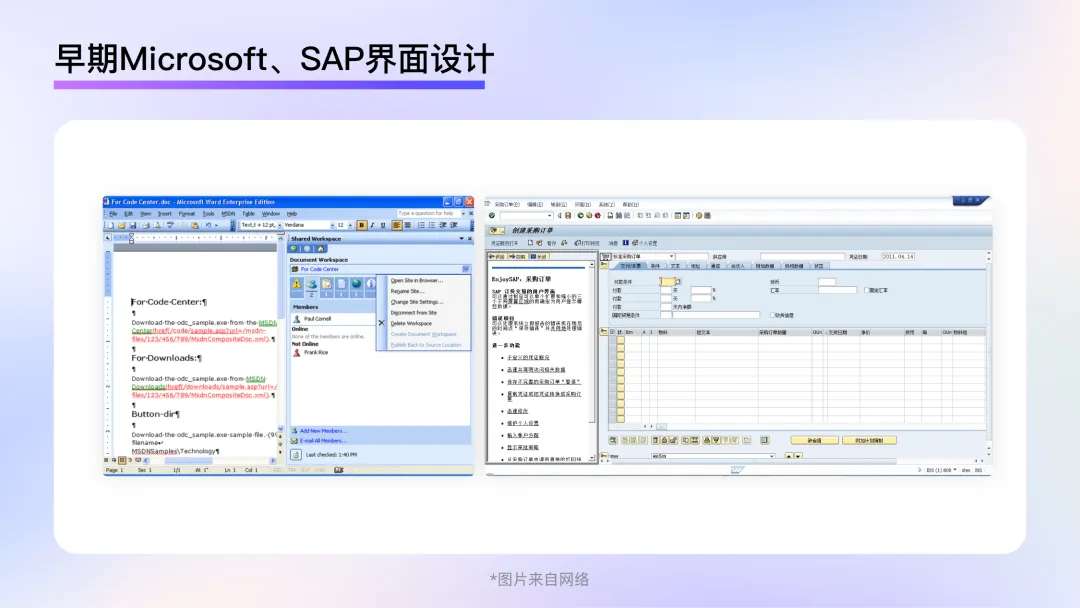
The main reasons for this early style:
1. Technical framework limitations: In the early days of software development, mature front-end frameworks and libraries were scarce, leaving developers with very limited technical choices. The technological environment lacked the rich set of tools and frameworks available today (such as React, Vue.js, and Angular). Under these conditions, developers focused primarily on ensuring functional implementation, often at the expense of visual appeal and user experience. As a result, many products featured simplistic designs that prioritized basic functionality over aesthetics, leading to interfaces that felt dull and outdated.
2. Focus on practicality: Many products of that era, including the renowned Office suite, were designed with practicality in mind rather than with an eye toward beauty or optimal user experience. This mindset contributed to the rough, unrefined style of many early designs, lacking the sophistication and attention to detail that modern design seeks to achieve.
Stage 2: Design Systems Bring Simple, Friendly Interaction Experiences
With the rapid advancement of information technology, businesses have become increasingly focused on efficient management and superior user experiences. The emergence of Fiori and Salesforce not only represented innovation in product design but also sparked a renewed recognition of the importance of B2B design within the industry. In the past, many companies may have prioritized feature functionality while neglecting the role of design in enhancing user experience. Fiori and Salesforce, however, successfully captured user attention with their elegant interfaces and smooth interactive experiences, gradually prompting businesses to realize that design can significantly enhance product value.
In China, the release of design systems such as Ant Design and Element marked the standardization and formalization of design in B2B products. These design systems provide a comprehensive design language and component library, enabling enterprises to design products more efficiently and consistently.
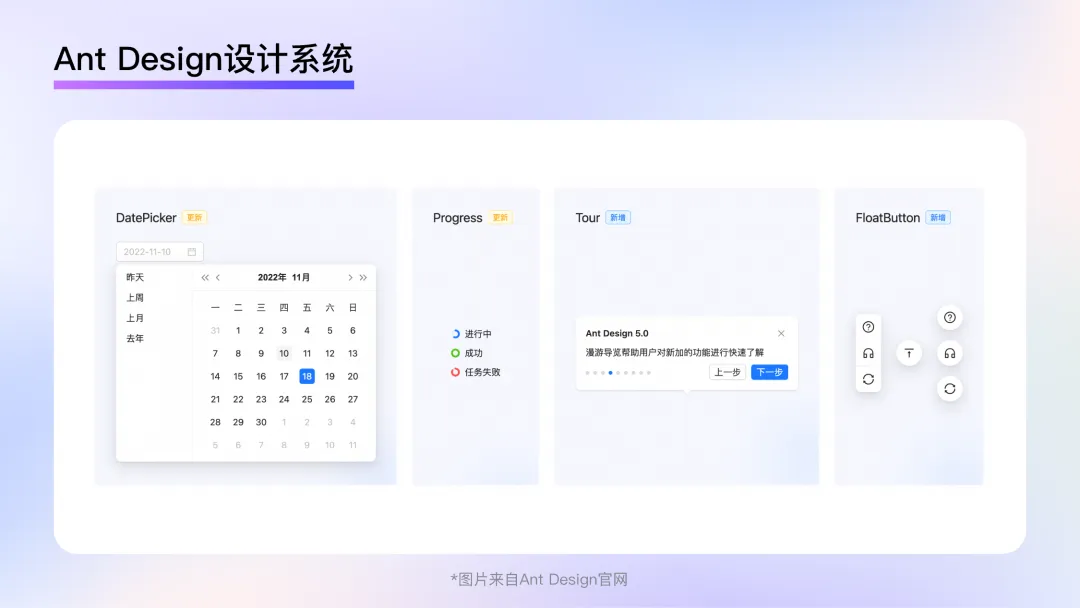
The main reasons for this mid-stage trend:
1. Growing internal enterprise needs: As companies expand in size and diversify their operations, the complexity of internal systems and tools increases. A unified design language and component library are needed to improve design and development efficiency and ensure design consistency.
2. Enhanced user experience: A unified design system helps deliver a consistent user experience, allowing users to quickly adapt to different products and modules, thereby increasing user satisfaction.
Stage 3: More Human-Centered Design Makes B2B Experiences Diverse and Inclusive
In recent years, the field of B2B design has seen a surge of diverse design concepts and styles, driven by evolving market demands and technological advances—a true "blossoming" of ideas. Well-known platforms such as Youzan, Weimob, ONES, Coding, and Teams, as well as Salesforce, are all continuously refining their B2B design experiences:
● Brand elements and personalized styles are integrated into product design to strengthen user recall. For example, Teams and ONES use color schemes and illustrations to enhance brand recognition;
● More dynamic effects and transition animations are introduced into interfaces to enhance interactivity. Platforms like Coding and ONES provide more vivid operational feedback, making interactions feel more natural and user-friendly;
● Dark mode is gaining popularity to meet users' nighttime needs. Apps like Youzan and Weimob have added dark mode options, offering more personalized choices;
● Design increasingly considers accessibility, including colorblind-friendly color schemes and responsive designs that adapt to various devices. Salesforce, for instance, has made significant investments in this area to ensure that all users can access its products without difficulty;
● Platforms are enhancing data visualization capabilities to help users understand data more intuitively. For example, Weimob and Youzan have added interactive charts and infographics to dashboards and reports.
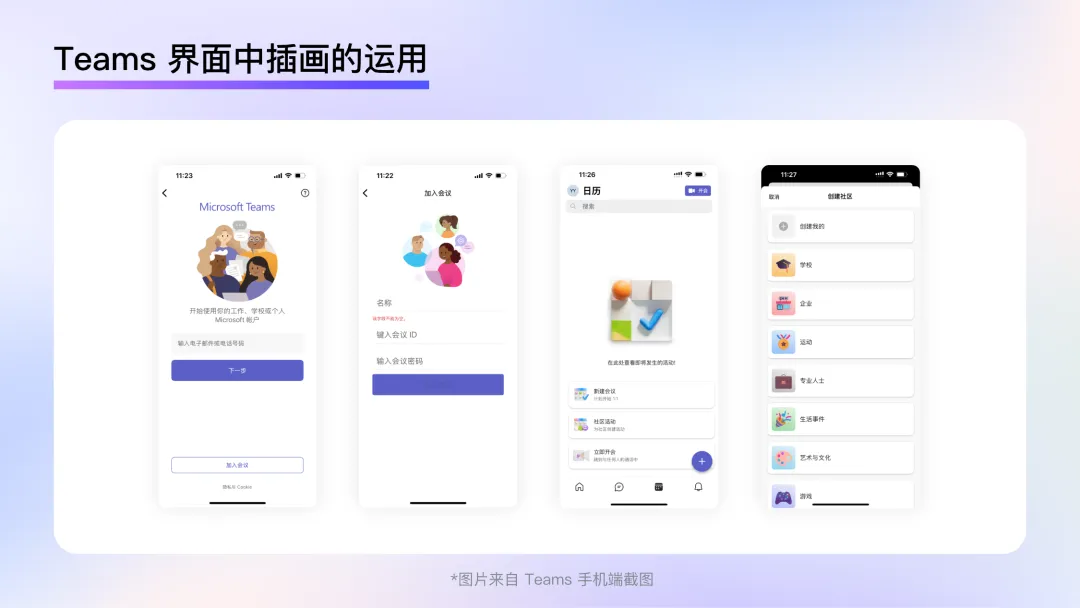
In summary, B2B design is evolving toward greater maturity and diversity, with a stronger emphasis on user experience to meet the growing needs of both enterprises and users. Future B2B design will adapt to new eras, new technologies, and new trends, closely aligned with clients' business value.
The Future: Personalization Becomes a B2B Design Trend in the Age of Super Individuals
Super Individuals Lead a New Era
In this new era, both enterprises and individuals will undergo profound changes. At the enterprise level, the advent of AI is giving rise to new collaborative processes—ranging from routine workflows like approval flows and work collaboration to entirely new, undefined processes. As these changes unfold, new organizational forms are quietly emerging around us. These organizations feature new structures, new members, new collaborations, and new processes, and can be referred to as "super organizations." At the individual level, employees within super organizations are seeing their creativity constantly stimulated. Enterprises are shifting their criteria for identifying top talent away from traditional measures such as educational background and knowledge accumulation, placing greater emphasis on the ability to generate innovative ideas, solve complex problems, and drive change. Such individuals are what we call "super individuals."
This is an era in which super individuals are emerging. Their capacity for output and their role within organizations far exceed those of the past decade. Companies that place the individual at the center and empower individuals to unleash their full potential will achieve greater growth. As a result, future B2B design will show a trend toward "B2B becoming more C-like," with more designs gradually serving the individual. Below, we'll explore, using DingTalk's real-world cases, how personalized design can help individuals enhance user value in B2B design trends: building individual identities, meeting emotional needs, and boosting confidence.
Trend 1: Building a Super Individual's Personal Identity
The success of an enterprise depends not only on efficient workflows and team collaboration but also on the uniqueness and individuality of every member within the company. Each person is not merely a "cog" in the machine; they are independent individuals who bring their own selves to the workplace. Different backgrounds, personalities, and styles contribute to the rich diversity of the team. For example, varying dress styles are an important expression of employee individuality. In some companies, employees are free to choose their attire rather than adhering to strict dress codes. This freedom not only makes employees feel comfortable and confident but also sparks their creativity. Consider a designer in casual wear or a financial analyst in a formal suit—their clothing choices reflect their professional characteristics and individuality, adding diversity to the work environment.
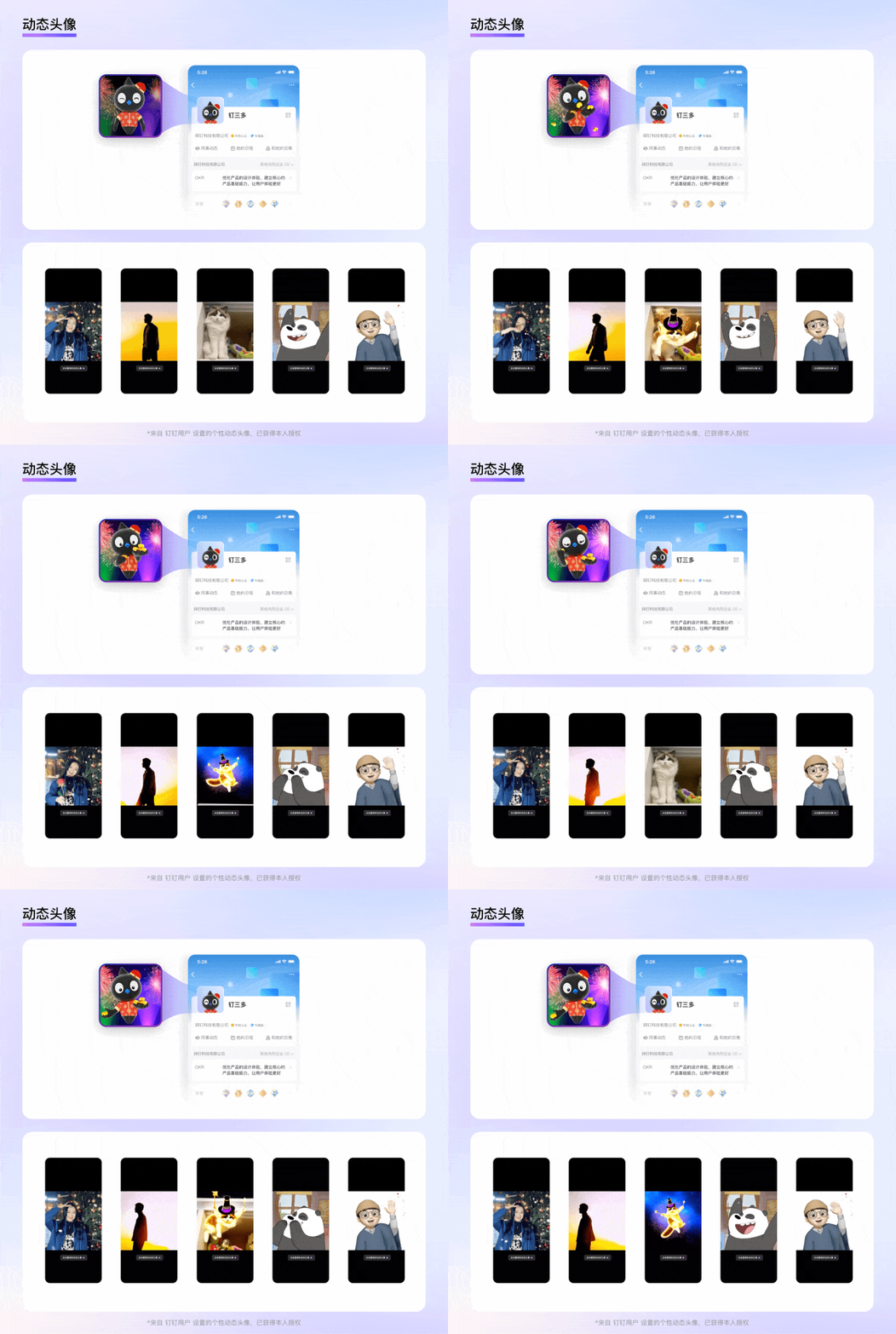
Design practice: Dynamic avatars
In the past, DingTalk was often perceived as dull and serious. However, in the new business environment, we aim to provide users with a more comfortable and relaxed experience while highlighting each individual's unique expression. An avatar is the first impression an individual presents to others, and it's rare to see two people using identical avatars because everyone is a unique individual. To reinforce this uniqueness, DingTalk has introduced a dynamic avatar feature. Dynamic avatars allow employees to express their personality and creativity in a more extreme way, and fun, animated avatars can spark conversations and discussions among colleagues, increasing interaction and strengthening team cohesion.
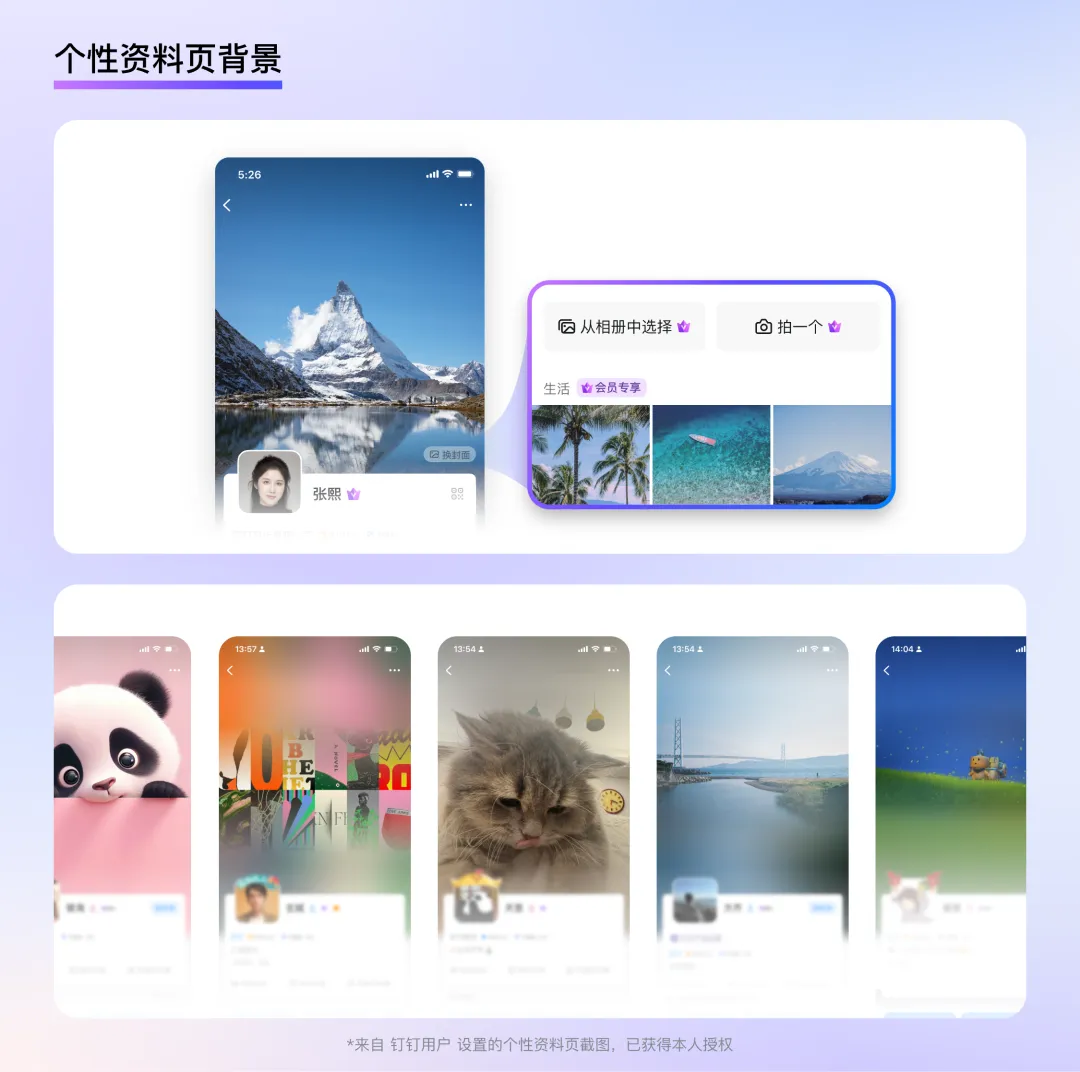
Design practice: Personalized profile page backgrounds
If an avatar is an individual's "self-image," then the profile page is an individual's "personal manifesto." An attractive, personalized profile page background can draw attention and encourage people to engage more actively. Such a background is not just decorative—it greatly enhances the user's social experience, allowing individuals to showcase themselves more effectively.
Trend 2: Personalization Meets Emotional Value
In modern society, fast-paced life and work have become the norm. Under intense work pressure, people are often bogged down by tedious tasks, feeling as though their time is being consumed by mechanical work. This kind of fragmented work not only lowers our quality of life but also leaves us mentally exhausted. Especially when we find ourselves in a dull, monotonous office environment, feelings of frustration are amplified.
Imagine walking into the office in the morning—cold walls surround you, dim yellow lights cast a gloomy atmosphere, and employees sit blankly staring at their computer screens, as if each person is trapped in their own little world. Such an environment feels incredibly oppressive; work becomes a mechanical repetition devoid of creativity and vitality. In this kind of atmosphere, thinking becomes sluggish, and creativity gradually fades. On the other hand, immersing ourselves in beautiful things, leveraging emotional resonance and mental relaxation, can provide fertile ground for fostering creativity.
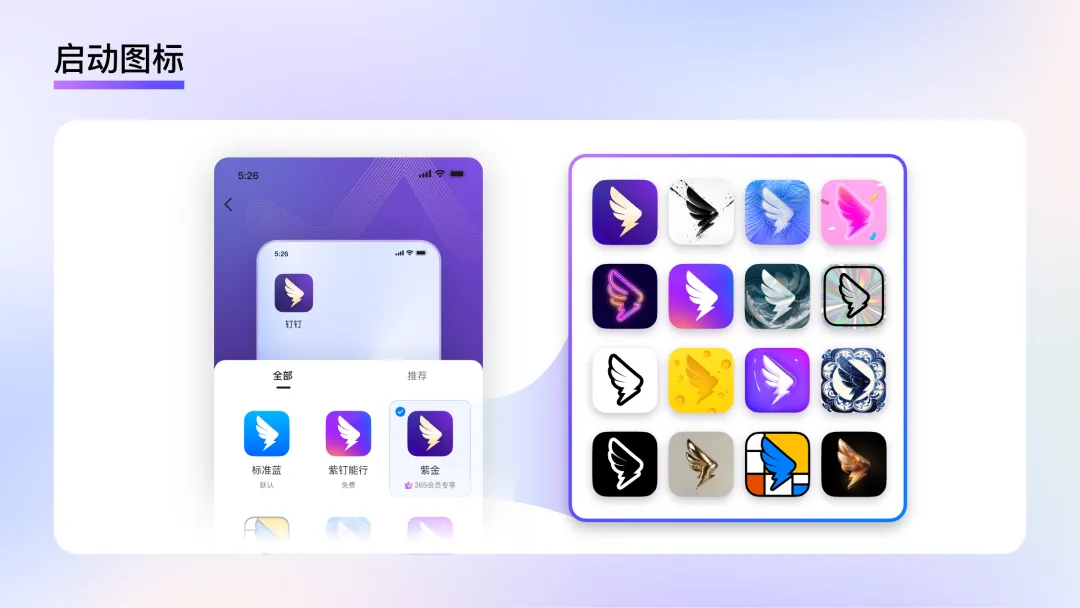
Design practice: Startup icons
Each company's interior design and office environment have their own unique character, reflecting the company's culture and values. DingTalk's startup icon is akin to a company's storefront—it's the first impression employees get when starting their day. Since DingTalk launched, the startup icon has been dominated by blue, a color that conveys a sense of calm and restraint. As the individual becomes more central to the design process, we want employees to feel empowered to express boldness and break boundaries, pursuing possibilities beyond the conventional. By redefining "DingTalk's infinite possibilities" through different materials, colors, and styles on a small startup icon, we are providing a source of inspiration for individuals. This not only creates a more pleasant and comfortable work environment for users but also encourages them to use the platform more frequently, sparking new creative ideas. In addition, DingTalk will soon open a submission portal where users can submit their own DingTalk icon designs for inclusion on the platform. Everyone is welcome to join in the DIY creative process!
Design practice: Personalized themes
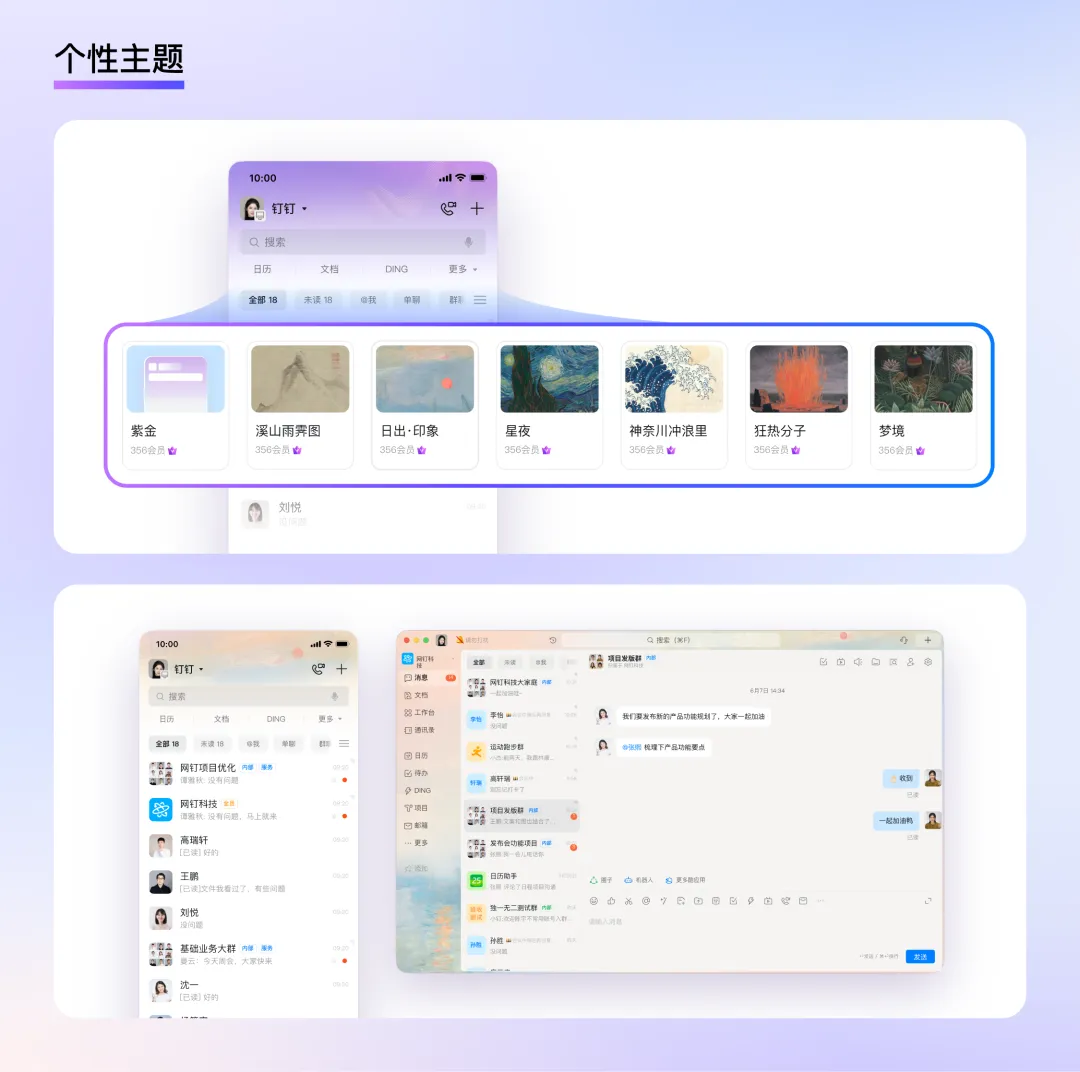
If DingTalk's startup icon is analogous to a company's storefront, then DingTalk's skin themes are like an employee's office space. Every employee has different preferences and interests, leading to varying needs for the work environment. Some may prefer a simple, clean office space, while others may favor a creative space filled with color and decoration. Similar to personalized startup icons, we have created a rich collection of themed skins for users. When users work in an environment that aligns with their personal style and preferences, they are more willing to invest time and energy, and this active engagement fosters creativity.
Trend 3: Highlight Individuality, Boost Confidence
Confidence is the source of creativity and execution. When each person's unique strengths are recognized and valued, they feel supported by their team and organization—a recognition that forms the foundation of confidence. Increased confidence encourages employees to explore innovations more boldly, offer diverse opinions and suggestions, and unlock higher levels of creativity at work. At the same time, confidence strengthens an individual's decision-making abilities and sense of responsibility during task execution, motivating every team member to take on challenges proactively.
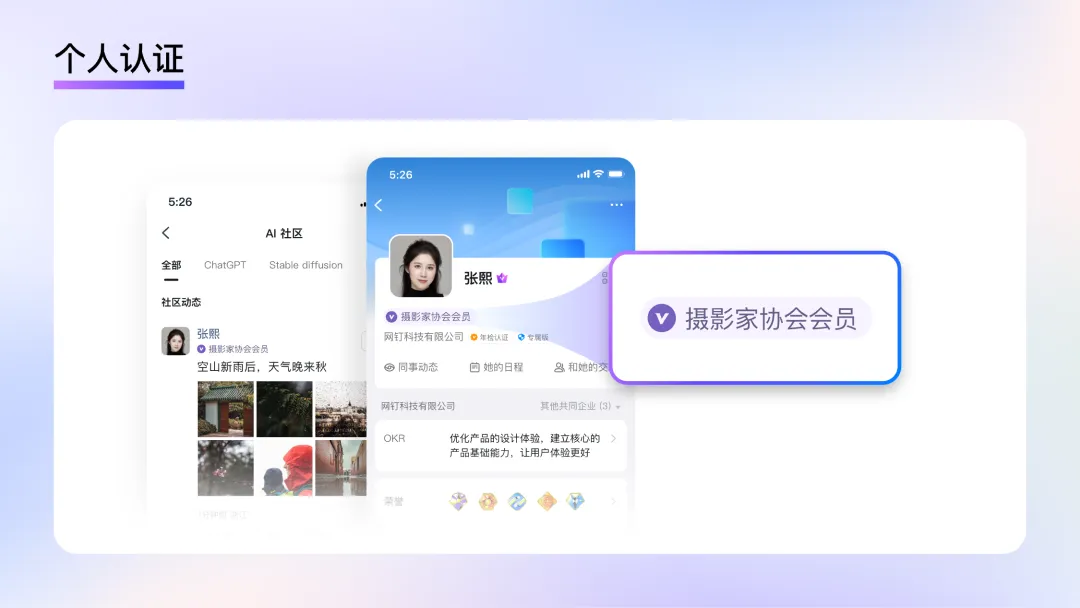
Design practice: Personal certification
In this era of diversified development, every individual possesses unique value and potential. Everyone wants to be recognized by others, and showcasing one's achievements and strengths is an effective way to gain that recognition. In this regard, DingTalk aims to provide a platform for each individual to display themselves and share their honors and accomplishments. This not only helps shape an individual's image but also boosts confidence, enabling them to demonstrate greater creativity and effectiveness in their work. Currently, DingTalk supports professional and educational certifications, and in the future, it will also support certifications for professional expertise and honors. Let every shining moment be seen and valued.
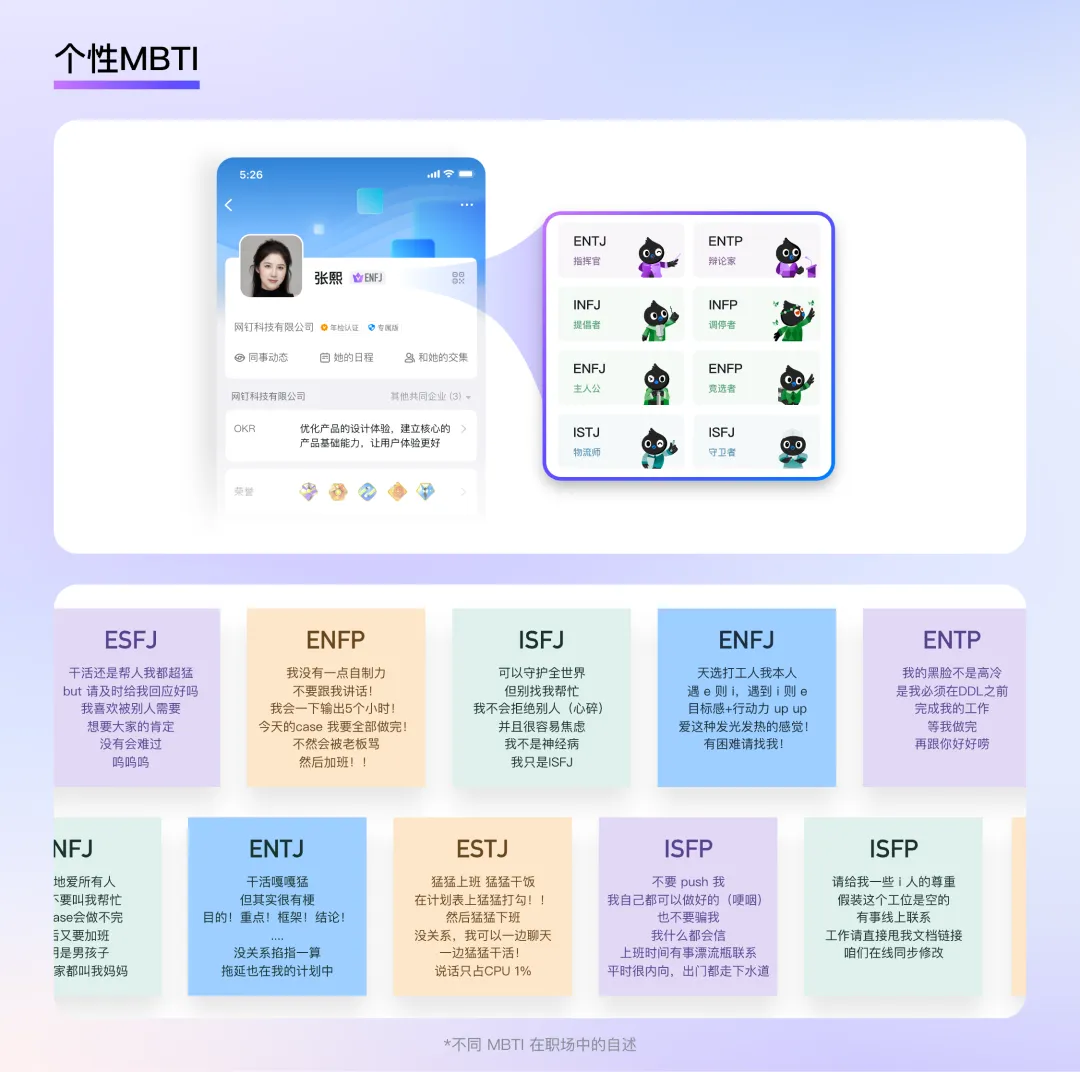
Design practice: Personalized MBTI
Collaboration is not standardized; different types of people working together produce different kinds of sparks. Extroverts (E) tend to prefer face-to-face communication, while introverts (I) may favor written communication. Feelers (F) may place greater emphasis on interpersonal relationships, whereas thinkers (T) focus more on logic and facts. Intuitives (N) may excel at generating creative ideas from a big-picture perspective, while sensors (S) perform better in handling concrete details. Recognizing that everyone's thinking and working styles differ helps foster psychological safety and a sense of belonging within a team, encouraging members to express their ideas openly.
In Conclusion
With the rise of super individuals, B2B products are no longer serving enterprises alone—they are also serving individuals, marking a growing trend toward "B2B becoming more C-like." As this trend unfolds, B2B design will place greater emphasis on personalized design for individuals, helping them build personalized identities, deliver emotional value, and boost confidence. DingTalk, a leading enterprise-level communication and collaboration tool, has long been committed to helping businesses achieve digital transformation. Over the past decade, DingTalk has grown alongside its customers—from large enterprises to small and medium-sized businesses, and to every super individual—with a constant focus on their unique experiences and needs. We know that the success of an enterprise depends not only on the quality of its products and services but also on the experiences of its diverse users.
This concludes our discussion on the personalization trend in B2B design. Next, we will delve into the essence and development trends of B2B design from the perspectives of style, texture, and layout.
DomTech is DingTalk's officially designated service provider in Macau, specializing in providing DingTalk services to a wide range of customers. If you'd like to learn more about DingTalk platform applications, please contact our online customer service directly, or reach out via phone +852 95970612 or email [email protected]. With an excellent development and operations team and extensive market service experience, we can provide you with professional DingTalk solutions and services!