




 Português
 English
This June, DingTalk officially launched the "DingTalk Management Suite." Built on the backdrop of an open DingTalk ecosystem, this suite of products is co-created with partners to address high-frequency business scenarios such as HR, finance, travel, marketing services, and contracts, aiming to help enterprises achieve digital transformation.
Over the past year, the focus of the Management Suite has been on building product capabilities, integrating ecosystem partners, and refining a unified user experience. But as the product moves toward the market, how can we better help customers use the product, understand its value, and truly solve their business problems?
This article will explore three key aspects—[Understanding Business Goals - Co-creating Design Focus Areas - Leveraging Data-Driven Insights to Accelerate Value Realization]—to share how business designers have explored and implemented strategies in the process of bringing B2B products to market.
I. Step Outside the Product: Understand Business Goals
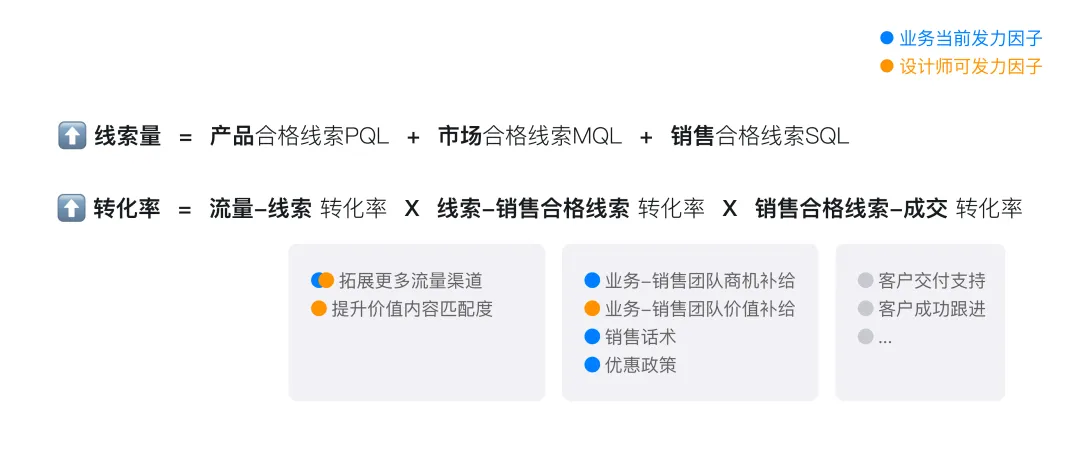
Understanding which growth strategy a business is pursuing helps us make informed design decisions. So how does the business break down its growth objectives?
The growth formula reveals that "lead volume" and "conversion rate" are the primary controllable factors. At the same time, "insufficient value delivery" and "low-quality opportunities" are critical issues that need immediate attention. By further breaking down the formula, we can identify specific design levers to address these challenges.

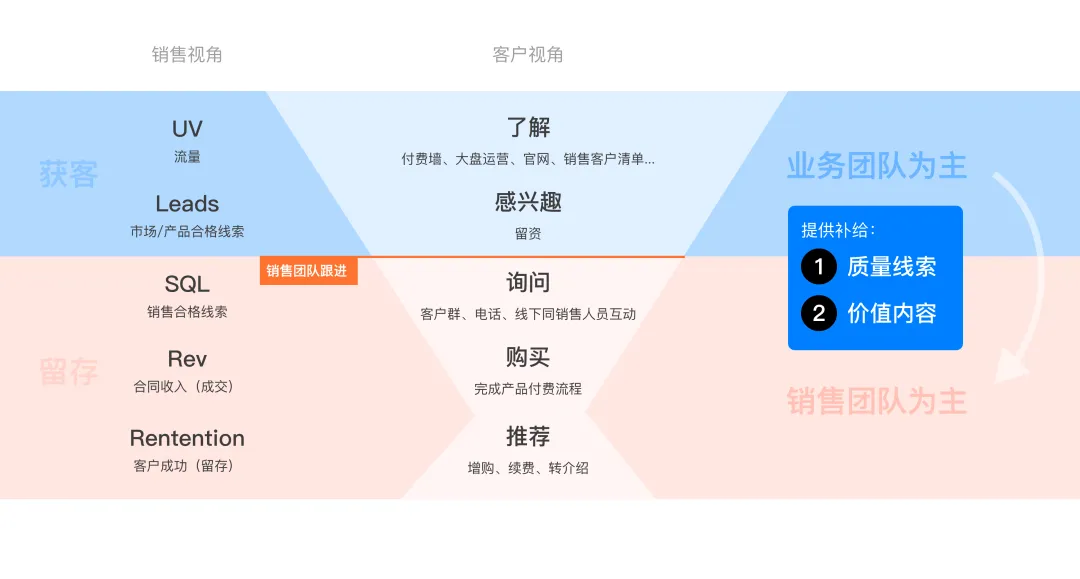
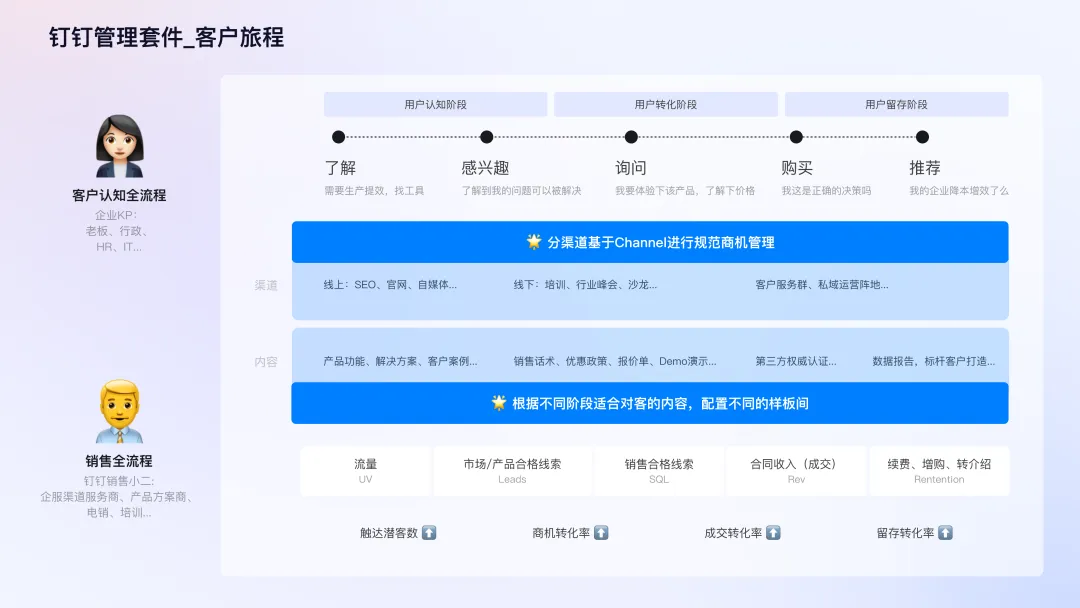
By examining the entire customer journey, we find that in a growth model centered on SLG (Sales-Led Growth), the sales team plays the primary role in delivering value during the "sales-qualified lead to deal" stage.
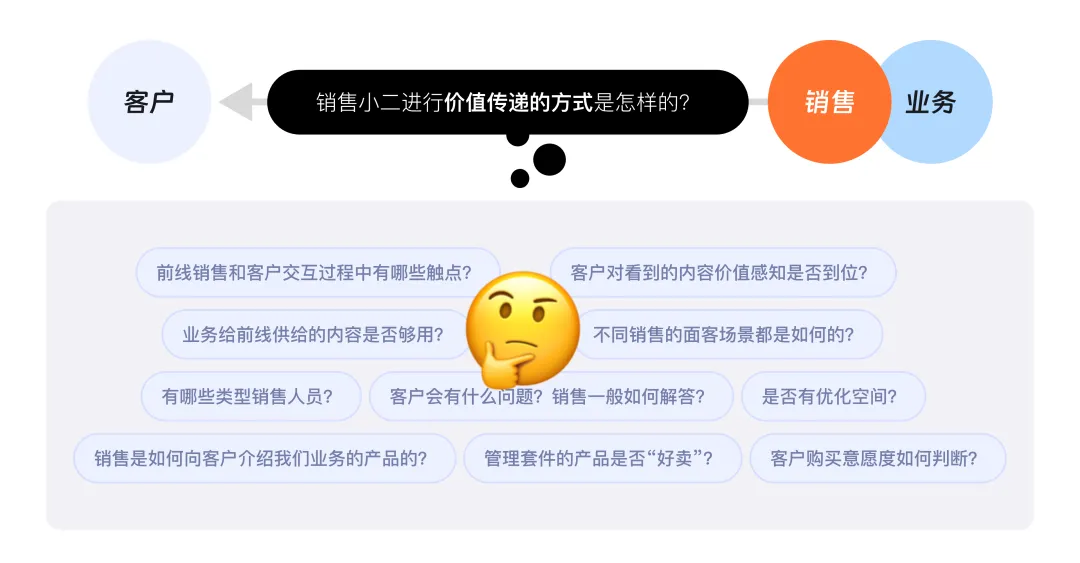
So the questions arise: Are we clear about the following?
Is the content provided by the business to frontline sales teams sufficient?
Does the customer fully perceive the value of the content they see?
What touchpoints exist in the interaction between frontline sales and customers? Are there opportunities for optimization?
II. Deep Dive into Scenarios Through Co-Creation: Identify Design Focus Areas
To address these questions, we conducted in-depth co-creation sessions and scenario research with various sales teams. We learned that different types of sales teams vary significantly in how they connect with customers, the customer segments they serve, and their positioning in terms of sales capabilities. Overall, two common pain points emerged across these scenarios:
1. Sales reps struggle to explain clearly, making it hard for customers to understand—and hard for opportunities to move forward.
2. PDSA (Product, Solution, and Delivery Assessment) presentations fall short; reps are stretched too thin, and it's hard to measure results.
To tackle these challenges, we explored the concept of a "digital product experience showroom" as a potential solution.
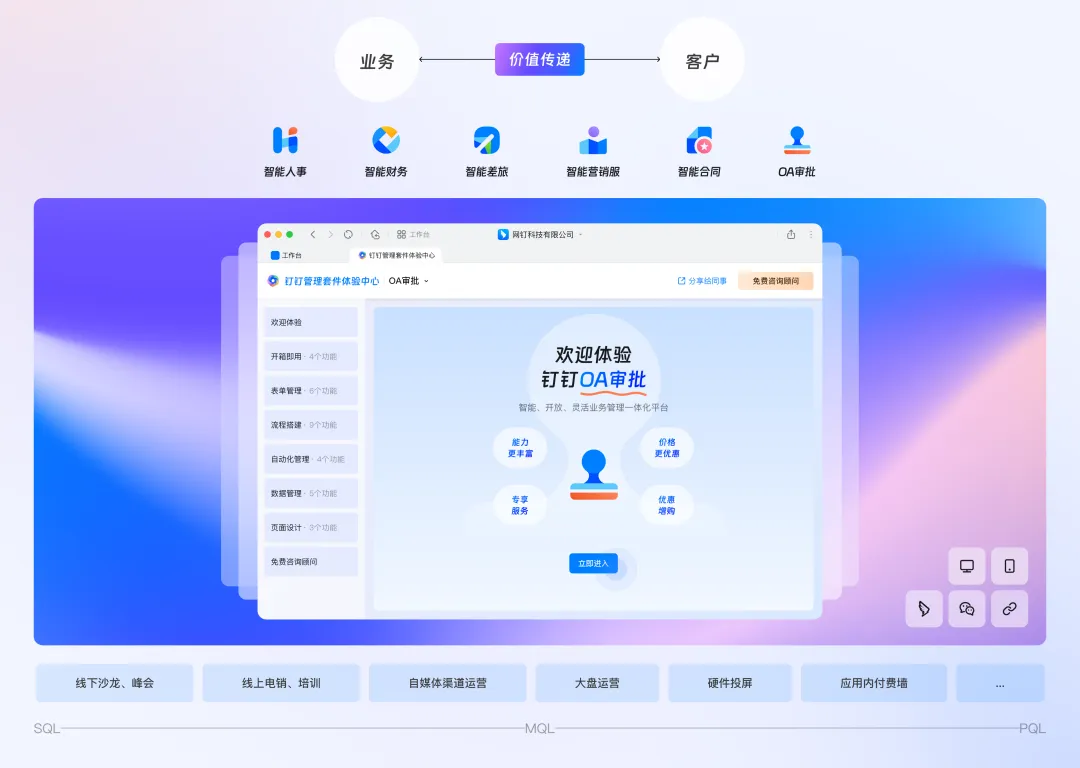
1. [SOP-Based + Toolized Approach]: Lower the Barrier to Information Access
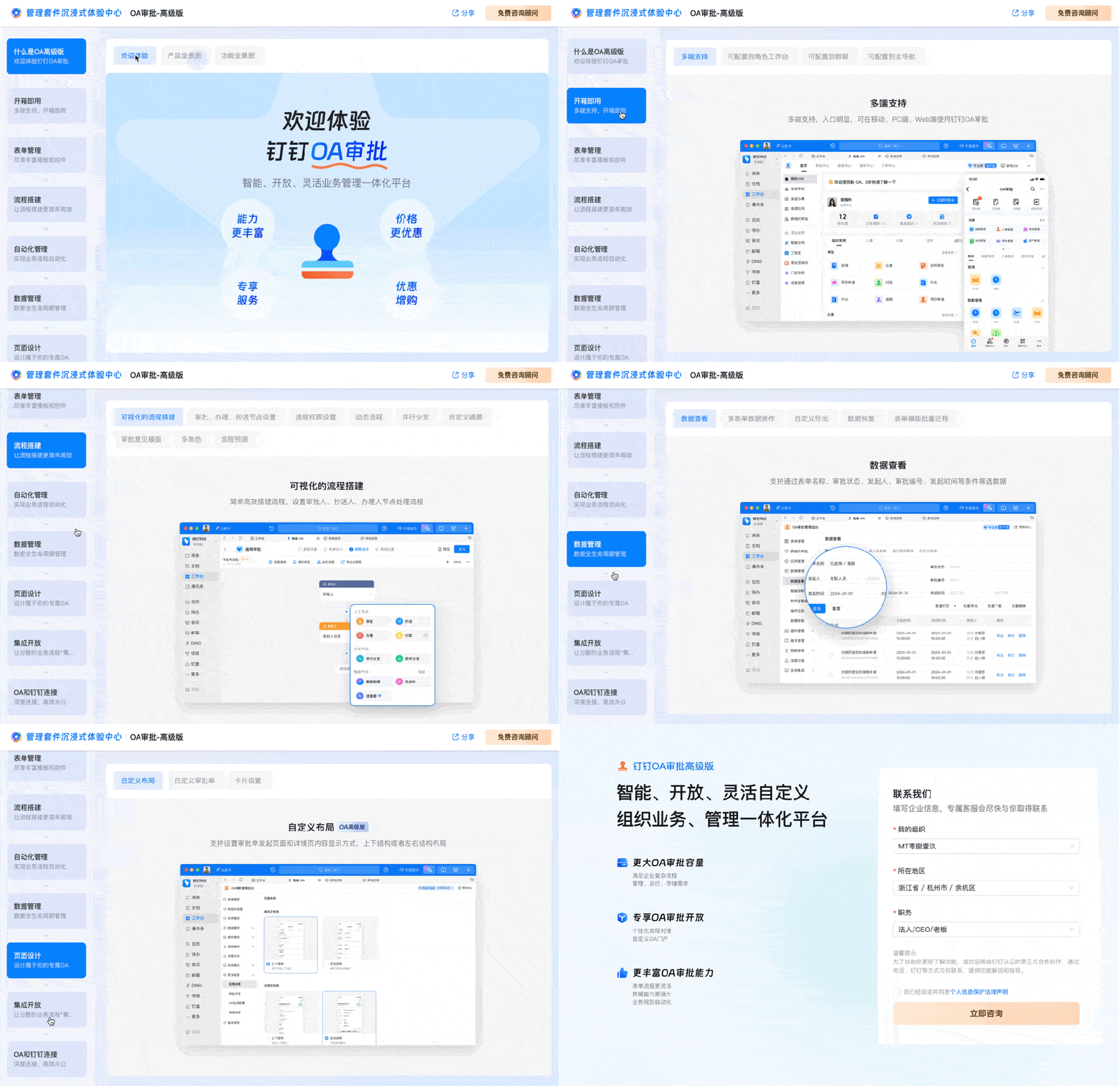
We structured and packaged the core customer-facing content of the product in a systematic way. This approach provides sales reps with a clear framework when presenting solutions to customers, making it easy to use right away and lowering the learning curve. It works well for online training demos and offline workshops.
We also toolized the showroom capabilities, enabling configuration of different business-specific and format-specific SOP content. This helps address the issue of "sales reps struggling to explain clearly."

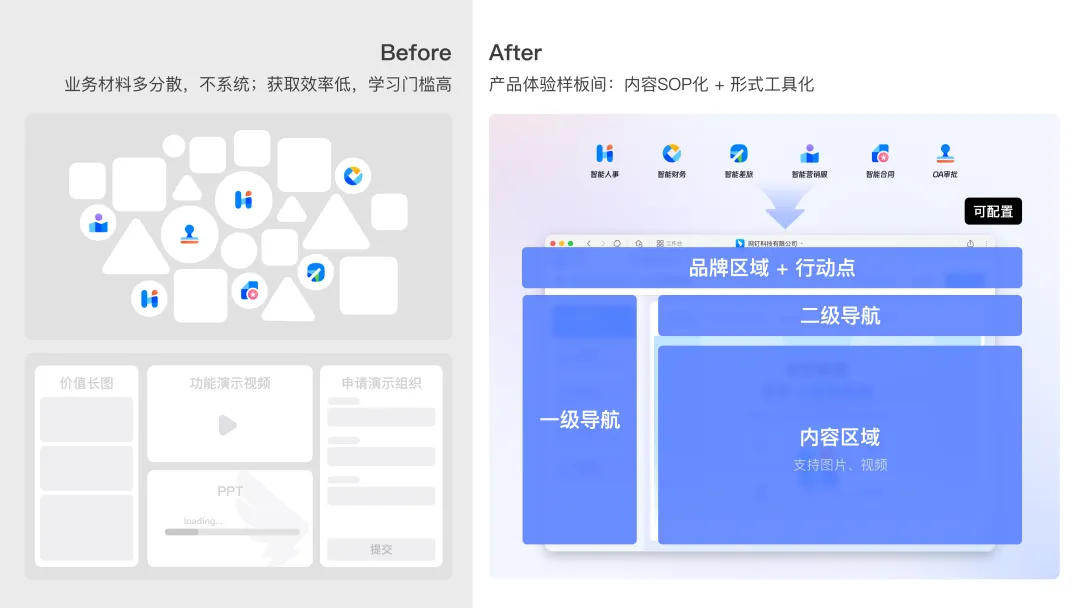
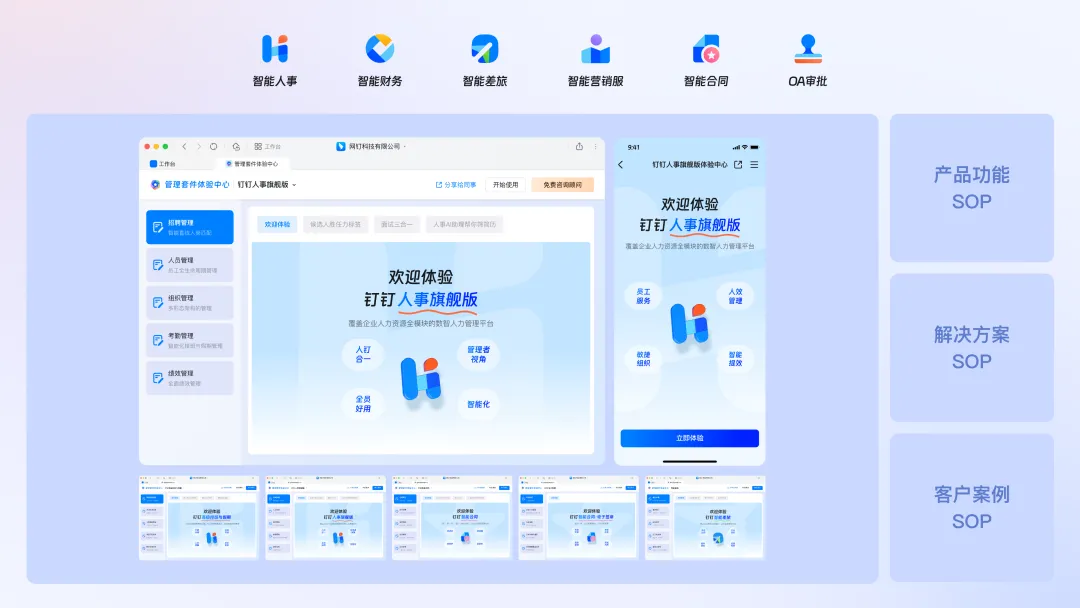
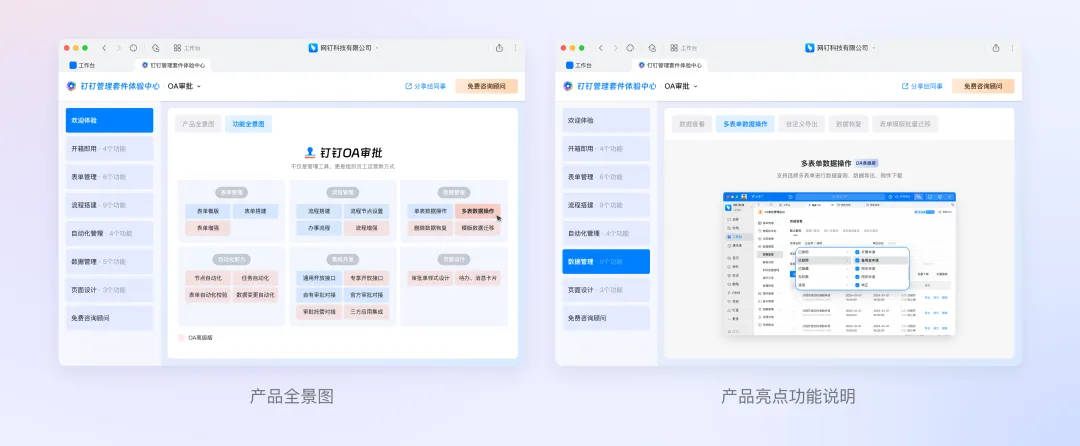
2. [Flexible Sharing]: Boost Information-Transfer Efficiency
The digital nature of the showroom tools makes them far more flexible and easier to distribute than traditional PPTs or long-form value decks. A single link or QR code can be shared with customers at any time, eliminating the headaches sales reps face with slow image/video downloads or PPT compatibility issues.
In scenarios where customers are still in the lead-to-sales-qualified-lead phase, SA (Sales Associates) no longer need to follow up directly—they can simply send the prepared showroom SOP to sales reps. The content can also be forwarded among customer decision-makers, allowing customers to learn about the product. This partially solves the problem of "PDSA presentations falling short" and frees up capacity for sales teams.

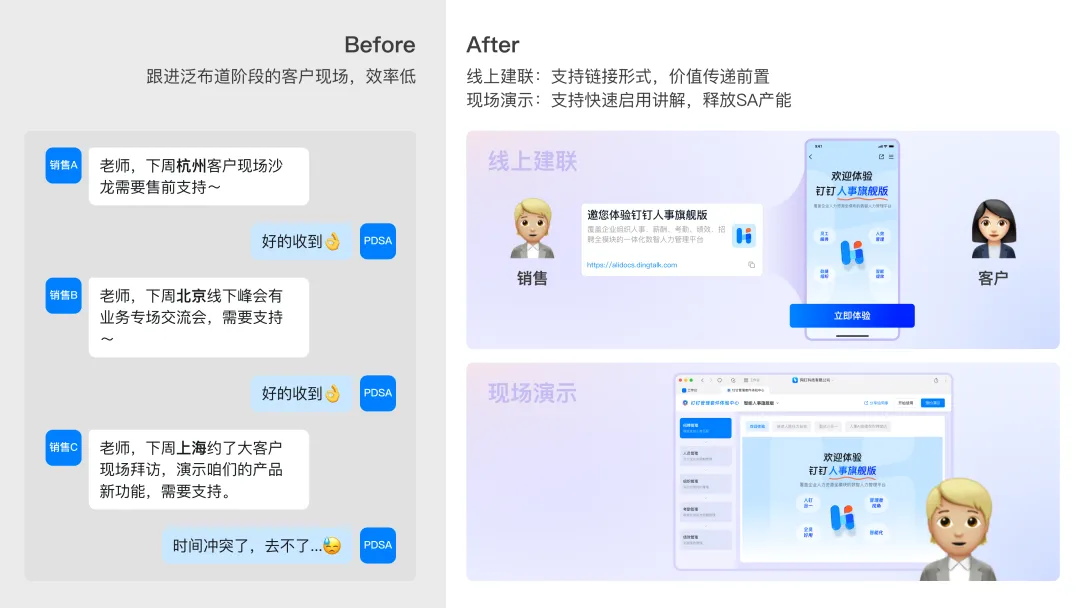

3. [Design-Driven Approach]: Expand New Channels, Increase Prospective Customer Touchpoints
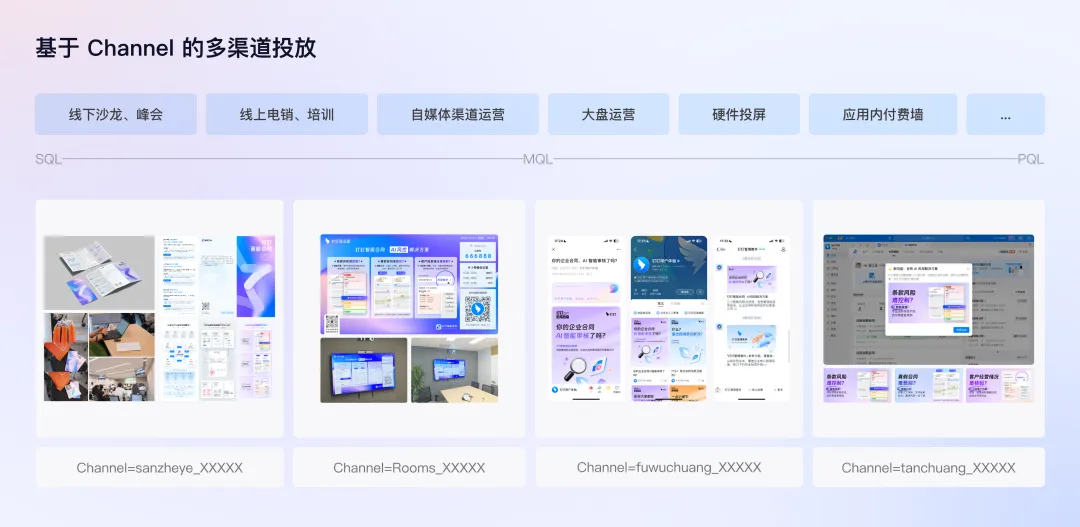
In addition to digitizing the showroom tools, the business also needs to provide ongoing "supply" to sales teams. To boost conversion rates in the "lead-to-sales-qualified-lead" phase, the company must expand its channels to increase exposure to prospective customers. In terms of content, the business needs to deliver the appropriate product value through different channels—delivering the right message to the right audience and reducing the cognitive load on users.
To meet these needs, we designed content tailored to different communication channels and identified suitable customer-facing scenarios. This led to the development of new channel-specific materials, such as meeting-room screen projections and offline tri-fold brochures.
At the same time, we standardized the display of lead-generation QR codes (including, but not limited to, showroom QR codes) and used a channel-based management system to track opportunities generated across all channels. Subsequently, we can optimize and refine AB testing strategies based on opportunity conversion performance.
In summary, through co-creation with users, we identified design opportunities and developed solutions to address these common pain points.
But how do we quantify the impact of these efforts on business goals?
III. Data-Driven Thinking: Accelerate Value Realization
An analysis of the customer journey map reveals that customers have different needs at different stages of awareness.
As designers, our role is to ensure that product offerings align quickly with customer pain points and that commercial goals are presented to customers in a more rational and compelling way.
Based on the "sales-code showroom tool," we can configure different SOP content for different customer personas and awareness stages, enabling more precise delivery of product value. At the same time, by leveraging the "channel-based opportunity management approach," we can monitor the performance of each channel, making design outcomes quantifiable, optimizable, and predictable. This ultimately improves conversion efficiency at every stage of the sales process, helping the business achieve its commercial goals faster and more effectively.
Conclusion
As a designer working in a commercial company, design must not only solve user experience problems but also align with business goals and drive growth.
[🏃 Understand business goals — 🏃 Clarify business context — 🏃 Co-create in deep-dive scenarios — 🏃 Identify design focus areas — 🏃 Leverage data-driven insights to validate design solutions]
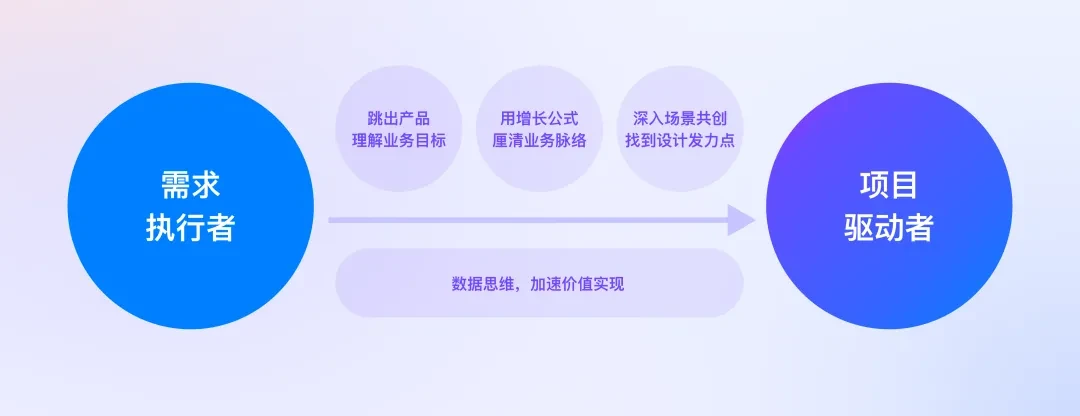
In this process, designers gradually transition from being "task executors" to "project drivers," while helping businesses unlock greater value.
DomTech is DingTalk's official designated service provider in Macau, specializing in providing DingTalk services to a wide range of customers. If you'd like to learn more about DingTalk platform applications, feel free to contact our online customer service or reach out via phone +852 95970612 or email [email protected]. With a strong team of developers and operations experts and extensive market service experience, we can provide you with professional DingTalk solutions and services!