




 Português
 English
The Growth Path of a New Generation of China’s Smart Manufacturing:
Born Global, Grown with AI.

"We chose DingTalk mainly because DingTalk listens to feedback."
At DingTalk's 10th-anniversary product launch last month, Shao Yin Technology CIO Chen Xiangshuai's remark instantly resonated with CIOs from major enterprises in the audience.
Chen Xiangshuai recalls that when he first encountered DingTalk in 2019, the platform's meeting system was not as smooth as it is today, and AI had not yet become a standard feature for collaborative office work.
Today, for Shao Yin—a company "born global"—DingTalk has become indispensable to its operations.
For ordinary Chinese consumers, "Shao Yin" may still be a niche brand.
But on the Boston Marathon course, you'd feel embarrassed to greet your friends if you weren't wearing Shao Yin headphones.
In 2012, armed with its independently developed bone-conduction "black technology," Shao Yin stole the spotlight at the International Consumer Electronics Show (CES): visitors lined up to experience the product, and a front-page story in The Wall Street Journal catapulted Shao Yin into popularity across North America.
And Shao Yin truly deserves this acclaim.

In its early days, bone-conduction headphones seemed almost counterintuitive. But after nine years of research and five iterations, Shao Yin broke new ground by overcoming four major challenges in bone-conduction technology: sound quality, sound leakage, power consumption, and vibration.
In 2024, Shao Yin topped the global sports headphone sales rankings, leaving all competitors far behind.
In recent years, Shao Yin's sales have grown by more than 100 times, with cumulative global sales exceeding 18 million units.
Its sales network spans more than 60 countries and regions worldwide; its overseas teams are based in Singapore, Japan, North America, and other locations.
In Chen Xiangshuai's words:
"We are not an 'export-oriented' company—we are a truly global company. Our brand was built overseas and then brought back to China."
A company's ability to collaborate effectively directly determines its competitiveness. For tech companies, meetings are the most typical collaboration scenario.
Shao Yin holds an unusually high number of meetings: cross-regional project development workshops, supply chain coordination meetings with external suppliers, internal strategy sessions, and global collaboration meetings with overseas colleagues—all place extremely high demands on the meeting system. Shao Yin needed a mature, reliable, cross-border meeting solution.
Shao Yin has more than 150 conference rooms across its global offices. After adopting DingTalk's meeting system, the company standardized the decoration and hardware of its conference rooms worldwide. Even the presentation screens in conference rooms now reflect a consistent corporate culture. In terms of meeting screen sharing, conference room booking management, and the experience of external partners, Shao Yin has achieved global uniformity.
DingTalk Meetings also features a powerful real-time translation tool: When you speak in Chinese domestically, English appears automatically on your overseas colleague's screen; when they send a message in English, you see an accurate Chinese translation.
In the end, pre-meeting scheduling became simple and efficient, AI provided real-time translation during meetings, and AI-generated meeting minutes and action items followed up after meetings.
From initial issues like network lag and translation errors to the eventual resolution of these challenges—on both the bone-conduction technology front and the path to globalization, where there were no precedents to follow—Shao Yin has leveraged DingTalk to achieve seamless global meeting coordination.

Chinese science and technology companies typically start by benchmarking against overseas counterparts—imitating, catching up, and then surpassing them.
But Shao Yin has no such benchmark.
It is the global pioneer and leader in open-ear headphones and a company that has developed technological solutions to overcome the four major challenges of bone-conduction technology: sound quality, sound leakage, power consumption, and vibration.
In 2021, Shao Yin won China's Gold Patent Award solely for its patent on "A Method for Suppressing Sound Leakage in Bone-Conduction Speakers and a Bone-Conduction Speaker."
The company has filed more than 5,000 patents, creating a robust technological moat—but also presenting a significant challenge for Shao Yin's digital management: How can explicit and tacit knowledge flow efficiently across departments while ensuring that core confidential information remains secure?
DingTalk offers a solution to this dilemma.
In the past, the flow of explicit and tacit knowledge was often inefficient, leading to frequent bottlenecks. For example, when a new employee returned from an overseas business trip, they didn't know how to process their expenses and had to ask senior employees for guidance. Even senior employees weren't always sure and had to consult finance or HR, which ended up being inundated with routine inquiries.
From "How do I fill out a travel expense form?" to "How are meal allowances calculated overseas?"—finance and HR spent countless hours each day answering similar questions. Not only was this inefficient, but it also offered little value to employees.
In reality, this type of explicit knowledge should have been openly accessible and readily available—but instead, it was fragmented across individual computers and different departments.
As a result, finding a cross-departmental document required asking the person involved; otherwise, no one knew which version was the most up-to-date.
The barriers to tacit knowledge within the technical team were even greater: not only did "black boxes" exist, but technical jargon—known only to insiders—created additional obstacles. When projects changed or personnel were reassigned, the "black boxes" remained closed, and the "technical lingo" went untranslatable, leaving everyone frustrated.
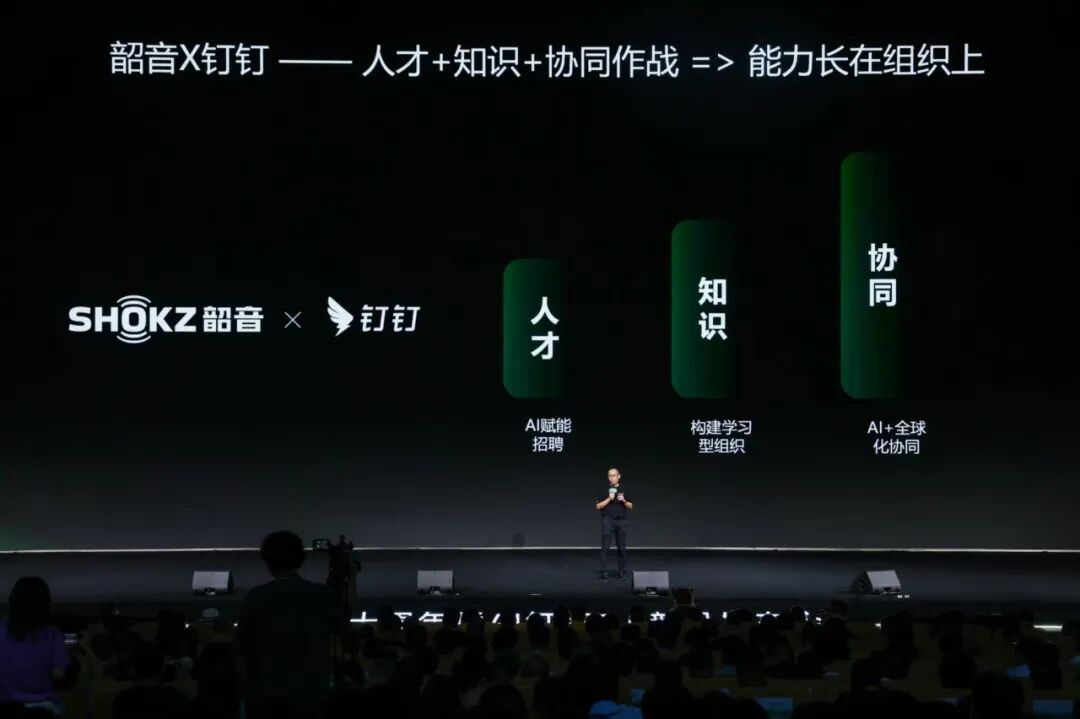
A turning point came in 2024, when AI began to be widely adopted in enterprises.
Soon, the IT and HR departments joined forces to compile all specialized terms and departmental jargon into DingTalk's "Enterprise Encyclopedia."
Employees quickly discovered that whenever they mentioned a specific term—such as "Building Module Function Verification—in a DingTalk chat, document, or group chat, a click would link them to an explanatory page. They could instantly grasp the relevant expertise, understand the business logic, and improve communication efficiency.
Encouraged by these benefits, employees formed "knowledge groups" and created more than 800 entries in the Enterprise Encyclopedia.
Supply chain, R&D, HR, marketing, and other business departments built departmental knowledge systems based on the knowledge base, deeply integrating knowledge with business operations.
For instance, the "Corporate Culture Group" uploaded all corporate culture-related knowledge, so new hires no longer need to ask around—they can simply search DingTalk for answers.
The booming knowledge base caused Shao Yin's DingTalk disk capacity to surge from 5T to 20T within just one year.
The integration of DingTalk's AI assistant solved the problem of "unable to find information." Previously, searching for "meal allowances for overseas business trips" might fail if the knowledge base entry was titled "Overseas Business Travel Standards," because the keywords didn't match.
But after DingTalk's AI assistant was introduced, it understood the semantics and delivered results instantly.
This "knowledge base + AI" model successfully broke down knowledge barriers and became a powerful tool for cross-departmental collaboration.
For a high-tech company, information security is even more critical. Recently, an internal information security incident left Chen Xiangshuai deeply shaken.
A intern in one department downloaded a large volume of the company's core technical documents before leaving. DingTalk's security alert detected the unusual activity and immediately notified the relevant departments.
An investigation revealed that some of the downloaded documents contained confidential data.
Thanks to the dual-layer protection provided by DingTalk and the company's internal systems, a major data breach was averted.
This experience underscored DingTalk's strong security capabilities and highlighted how efficient knowledge flow and precise containment can complement each other. It is this balance between openness and control that truly fuels innovation in high-tech enterprises.

Many people believe that using AI comes with a steep learning curve.
For Shao Yin's IT department, the real challenge lies in ensuring that frontline employees and even non-technical staff can effectively use DingTalk's AI tools.
"AI must be handed over to the business side. IT alone cannot create meaningful innovations with AI; the ultimate goal is to help the business solve real-world problems."
In fact, as Shao Yin's business expands globally and grows, the HR department is often the first to feel the strain.
Their biggest headache? Reviewing resumes.
Initially, screening resumes was a quick, straightforward task. But with the sheer volume of applications, HR teams found themselves spending an enormous amount of time on this seemingly minor task.
Exasperated, the HR team turned to the IT department, suggesting they try using DingTalk's "AI Spreadsheet." After all, it was easy to use right out of the box.
However, the initial trials were unsuccessful: the AI Spreadsheet's accuracy in resume screening hovered between 30% and 50%, requiring HR staff to manually double-check the results, which was highly inefficient.
To address this, Chen Xiangshuai led his team in two parallel efforts: continuing to provide feedback to the DingTalk team while working closely with the HR team to refine prompts and identify patterns.
In July of this year, a breakthrough occurred. With a major upgrade to DingTalk's AI Spreadsheet, the tool suddenly "clicked." At this point, the prompts had been updated 15 times, and the AI Spreadsheet's accuracy in screening resumes soared to 70%–80%.
Most importantly, the AI Spreadsheet's ability to accurately flag resumes for rejection met expectations.
Since then, HR teams can use the AI Spreadsheet to perform an initial screening of massive volumes of resumes in just a few dozen seconds. They can then focus on thoroughly reviewing the shortlisted candidates and freeing up time to concentrate on interviews, significantly boosting efficiency.
But DingTalk's AI Spreadsheet can go even deeper. Previously, at one of Shao Yin's offices in Shenzhen, a property security guard conducted nightly safety inspections of the office building after 8 p.m. However, the guards' standard procedure involved verbal reports or manual recording on paper forms, which were later transferred to Excel. This process lacked both rigor and timeliness.
They might spot a hazard but forget to record it upon returning, or they might enter the details into an Excel sheet but lose track of the exact location. Even when records were kept, the process often felt perfunctory. After a hazard was identified, there was no clear evidence or follow-up to verify whether and who had addressed it. When problems arose, disputes were inevitable.
Shao Yin quickly devised a solution using DingTalk's AI Spreadsheet: The security guard takes a photo, uploads it to the AI Spreadsheet, and the system automatically triggers a workflow. All follow-up actions—such as assigning responsibility for addressing the issue—are tracked in a single spreadsheet.
Once the solution was implemented, the security guards became hooked. Now, if a guard spots a "broken fire hydrant," they simply take a photo with their phone. The AI automatically identifies the issue in the image, triggers the next steps in the workflow, assigns the task to the appropriate person for resolution, and tracks progress in real time.
Today, Shao Yin employees have developed more than 700 AI assistants on DingTalk, making these tools accessible to even non-technical staff.
Shao Yin's "DingTalk + AI" innovations extend from deep research labs to the grassroots level, becoming productivity tools that everyone—from top executives to frontline workers—can easily use and benefit from.
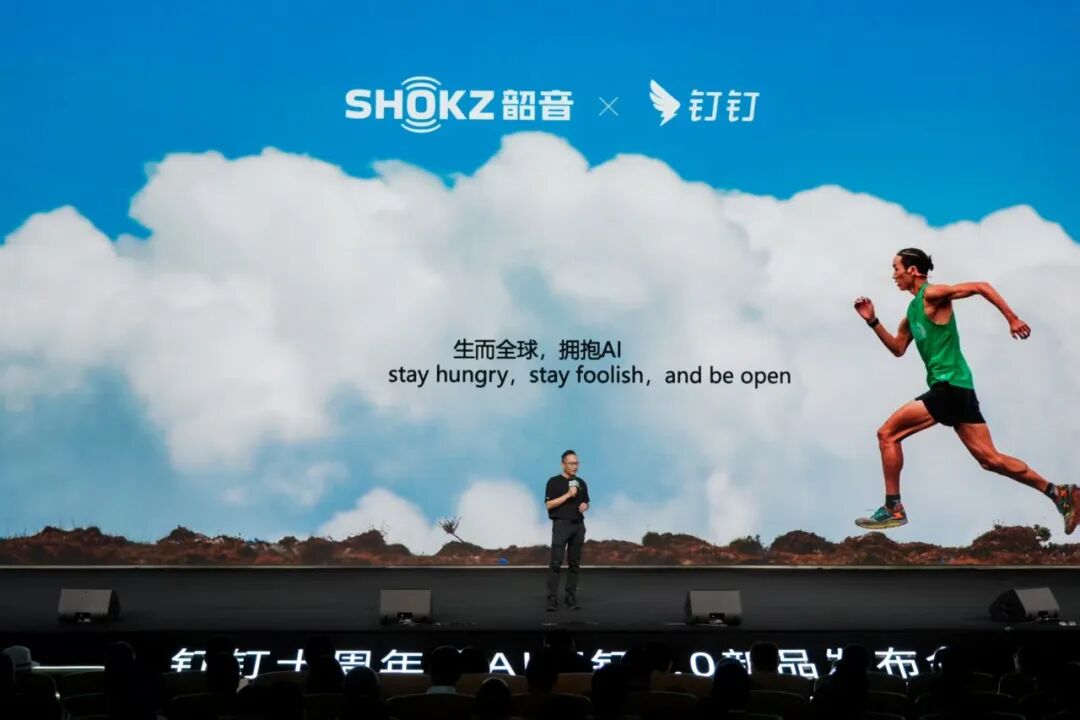
From HR to the knowledge base, from physical security to digital safeguards, from connecting China to communicating with the world—Shao Yin's innovations epitomize the new generation of high-tech enterprises in China.
Their technology is shaking the world; their brand is present globally; and their innovations are permeated by AI at every level.
Born global, Shao Yin is emerging as a new benchmark for technological innovation among Chinese enterprises.

DomTech is DingTalk's official service provider in Macau, dedicated to providing DingTalk services to a wide range of customers. If you'd like to learn more about DingTalk platform applications, please contact our online customer service or call us at +852 95970612 or email [email protected]. We have an excellent development and operations team with extensive market experience and can provide you with professional DingTalk solutions and services!