




 Português
 English
DingTalk’s Yida low-code platform is undoubtedly an accelerator on our enterprise’s digital transformation journey. As a rapidly growing company, we urgently needed a solution that could quickly respond to changing business needs while lowering the technical barrier. With its powerful low-code capabilities, DingTalk Yida enabled us to build various business-logic-driven applications in a short period of time, greatly improving development efficiency. More importantly, it allows non-technical staff to participate in application creation and optimization, truly achieving seamless alignment between business and technology.
— Li Gan, Chairman of Rongyue Tai
Rongyue Tai Wedding Banquet Center was founded in 2018 and has been dedicated to creating a top-tier, one-stop wedding banquet hotel model in China (i.e., an integrated banquet hotel combining event venues with high-end wedding decor, catering services, wedding planning, and professional wedding service personnel). Today, its business has expanded to multiple regions, including East China and the Greater Bay Area, spanning more than 10 cities. With over 20+ locations and hundreds of banquet halls, Rongyue Tai serves nearly 10,000+ couples annually. In 2024, the company successfully completed its IPO listing on the Drip Irrigation Exchange in Macau and was awarded the 2024 Forbes China Consumer “Rising Star of the Year” award. Rongyue Tai is committed to becoming a nationally recognized chain banquet brand, aiming to open 30 new locations within five years and add more than 150 banquet halls. By offering diversified, large-scale, professional, and personalized services, the company seeks to strengthen its core brand competitiveness and expand its chain footprint.

In 2024, as the company entered its sixth year, it faced serious challenges, including unconnected business processes, difficulties in accumulating and managing sales lead data, and high costs and frequent errors in cross-departmental data reporting. The hotel management team began actively seeking solutions. After extensive comparison and research, they chose DingTalk’s official low-code platform—Yida—in July. Yida’s robust business-building capabilities, flexible data processing power, and rich industry-specific solutions captured the management team’s attention. In particular, Yida’s ability to help enterprises quickly build information systems tailored to their specific business needs perfectly addressed the banquet hotel’s urgent need for business integration and data visualization.
Through Yida’s standardized modules and customizable building modes, Rongyue Tai, together with DingTalk’s official service provider, completed the construction of nine major business modules and nearly 100 core features within three months, meeting the company’s digital management needs across key business scenarios, including: data dashboards, brand operations, CRM management, procurement management, kitchen and foodservice management, project management, asset management, and service oversight modules.
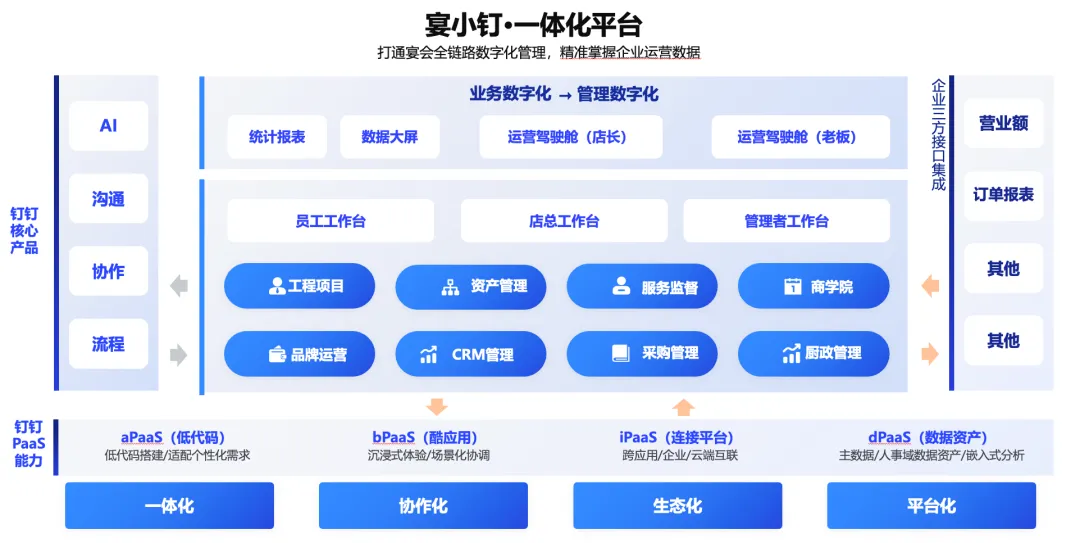
Business Dashboard: Helping the Boss Achieve “Digital Operations, Intelligent Management”
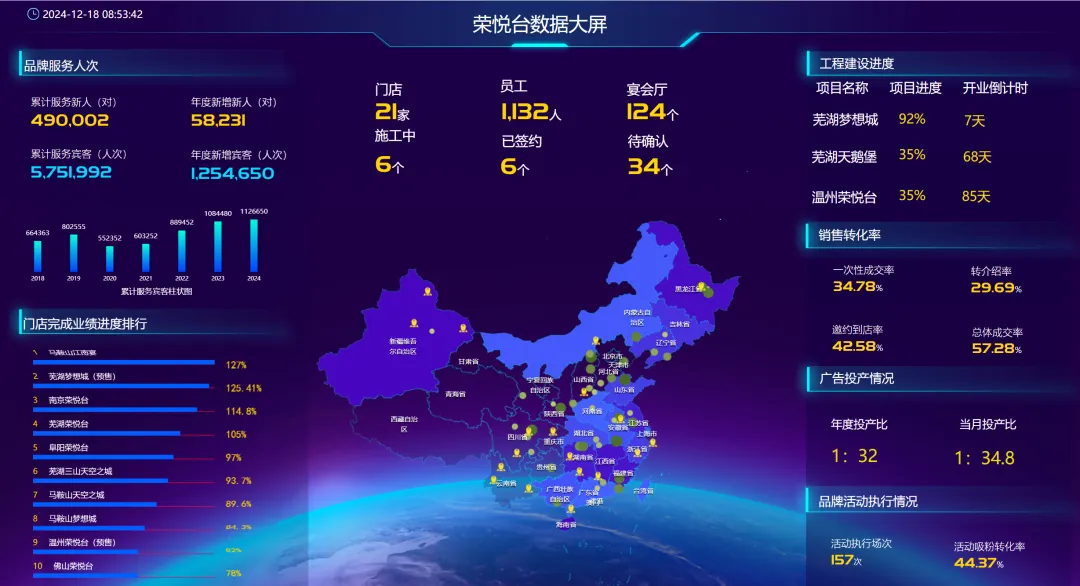
Enterprise-wide Data Dashboard:
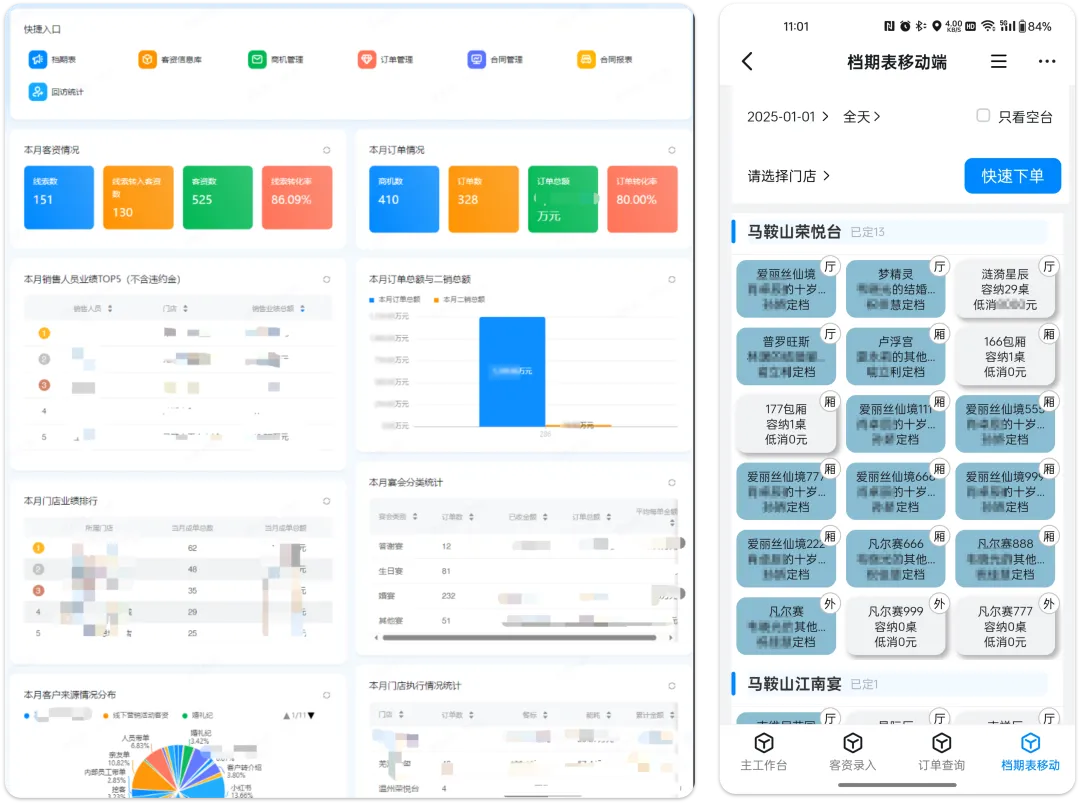
This module collects and aggregates core data metrics from all business segments of the enterprise, presenting them through a data dashboard to enable management to easily grasp the company’s operational status and provide data-driven support for managerial decision-making.
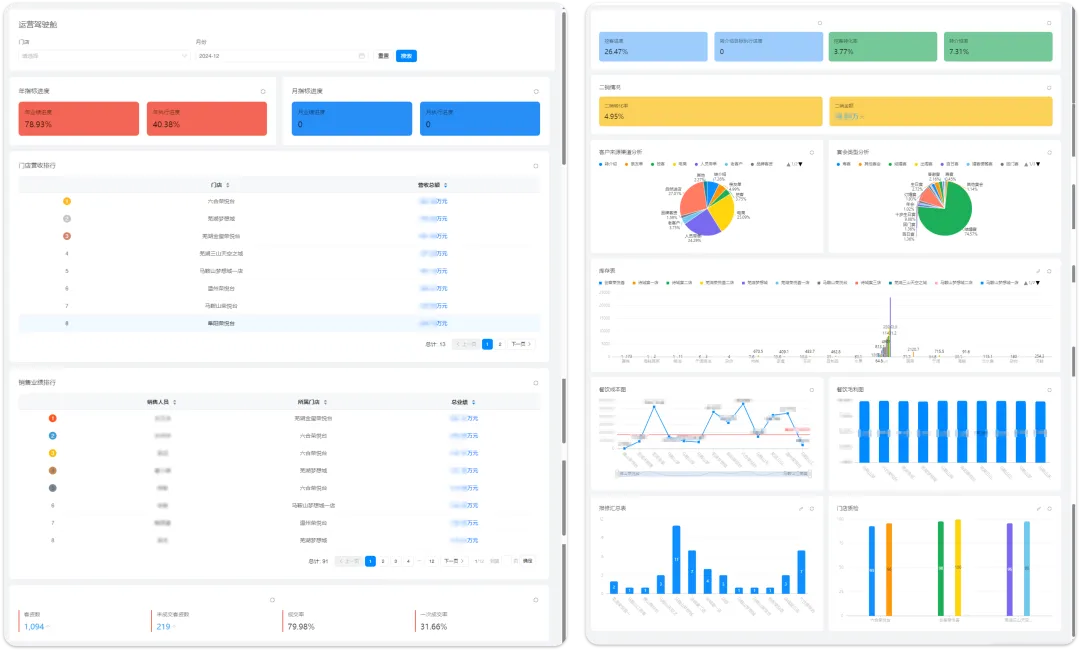
Boss’s Business Dashboard:
The boss can use the mobile app to monitor key business data at any time, relying on data for management decisions and ensuring that operations are well-informed and management is well-organized. Core data includes annual performance achievement, monthly breakdown of execution status, store receivables ranking, salesperson performance ranking, total customer acquisition, unconverted leads, conversion rate, first-time conversion rate, lead generation, referral rate, customer source channel distribution, banquet type distribution, secondary sales, store inventory status, operating gross margin, equipment failure reporting and maintenance costs, and store quality inspection results.
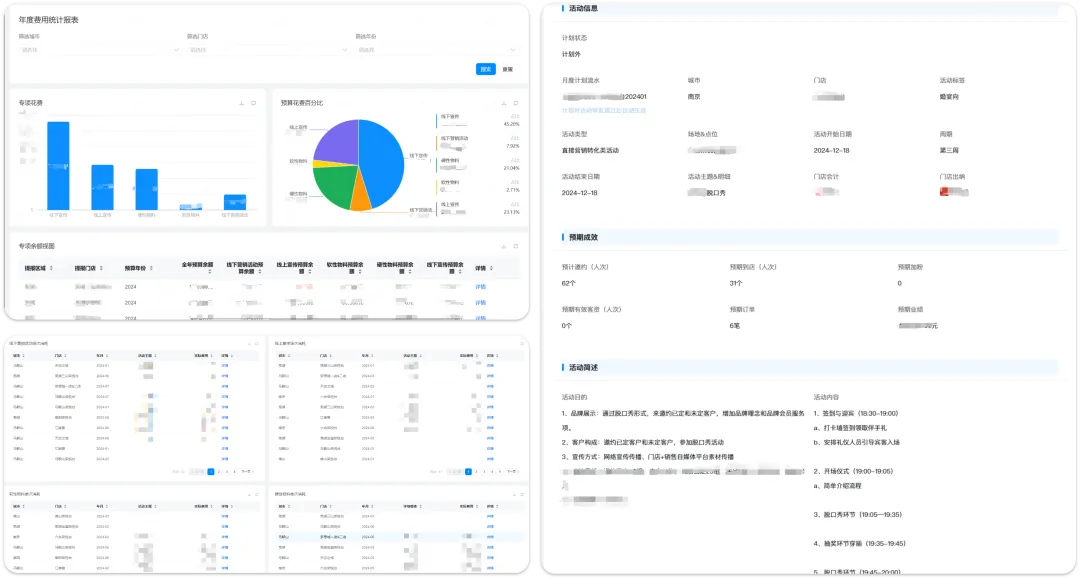
Brand Operations Management: Mastering the ROI of Every Event
By managing the annual budget and monthly event schedule for brand operations, this module helps the boss keep track of the return on investment for each event, ensuring that the boss always has a clear understanding of the situation. The focus is on managing pre-sales and ongoing brand promotion and marketing activities for each store, deeply integrating the store-level event budget allocation mechanism. Through meticulous planning before events, dynamic monitoring during execution, and comprehensive post-event reviews, a closed-loop management process has been established. This strengthens management’s precise control over budget spending and deepens its insight into and ability to evaluate the effectiveness of marketing campaigns.
Customer Asset Management: A One-Stop Solution for Managing Customer Resources
In the early stages of business operations, each store used several CRM systems available in the wedding banquet industry. However, as the number of stores grew, data silos became increasingly severe, and opening a new store required purchasing a system costing over 100,000 yuan, driving up costs. After building the system using Yida, Rongyue Tai achieved end-to-end management of wedding banquet customer resources—from lead entry and opportunity tracking to order booking, contract execution, and after-sales management. The system connects customer lead entry from the brand marketing side and leverages DingTalk’s messaging and AI notification capabilities to regularly update the boss and store managers on lead generation progress, existing customer opportunities, booking status, and performance goal completion. This provides data-driven insights to support decision-making.
In the sales ordering process, a corresponding mobile ordering page was developed for ease of use. The page provides a clear view of current event availability and empty slots, allowing users to complete event bookings and multi-product service orders in a single operation.
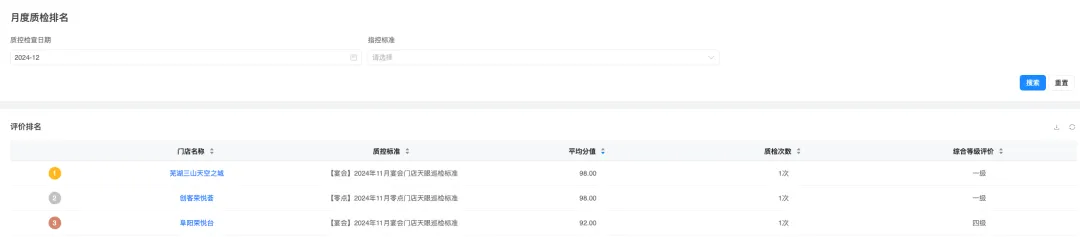
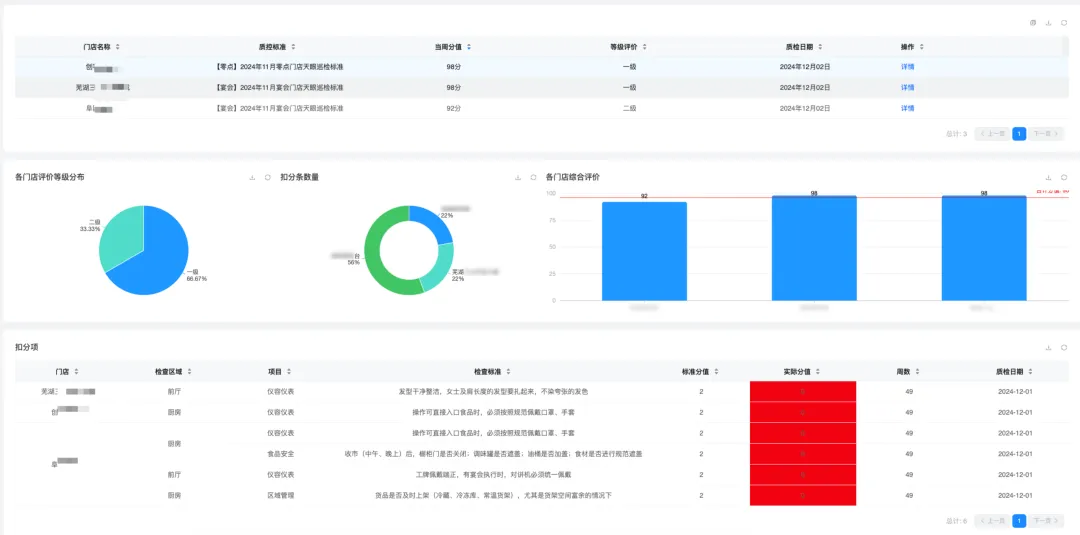
As a service industry, repeat customers and referrals are a critical source of new business. Therefore, after-sales service management is particularly important. Using Yida, Rongyue Tai built a comprehensive process for store quality inspections. Through core features such as setting service quality standards, monitoring and inspecting service quality, generating monthly store service quality rankings, and conducting multi-dimensional statistical analysis, a closed-loop service quality improvement mechanism has been established. By defining clear service quality standards, the system provides service staff with a clear set of guidelines, ensuring consistency and professionalism in service delivery.
Kitchen-Procurement-Supply Chain: Full Process Integration
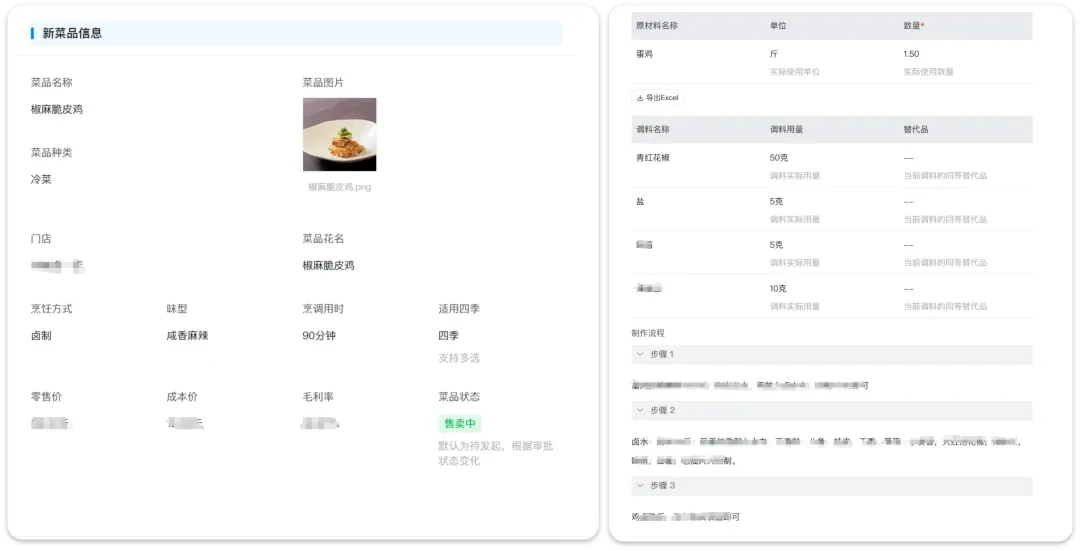
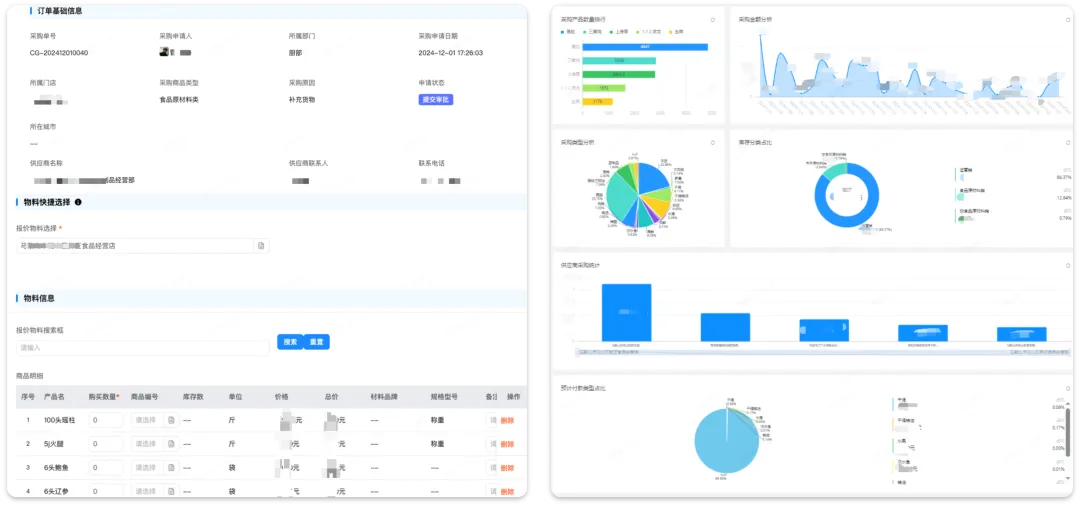
A menu and package library has been established, capturing data on dishes and packages currently offered at banquet and social dining locations. Within the dish data, a “dish card” (an SOP standard preparation process card) has been created, including main ingredients, auxiliary ingredients, seasonings, and preparation steps, enabling the systematic accumulation and refinement of core catering data. The system is also integrated with the procurement system, so when a store places an order, the system automatically calculates the required quantities of raw materials based on the master ingredient data.
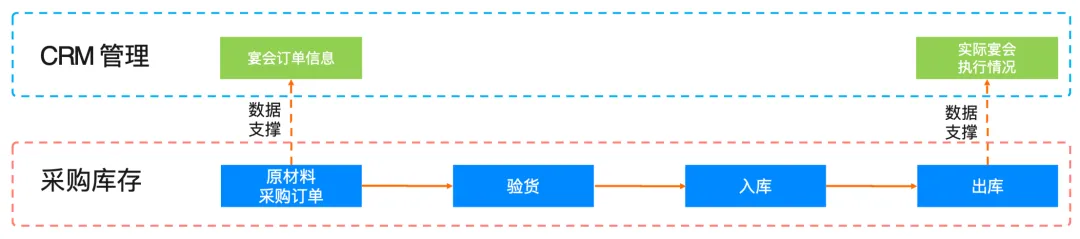
In the daily raw material procurement process at the store, before placing an order, the store’s procurement manager can use the CRM system to check the next day’s banquet order information. Based on this information, the system automatically generates a detailed raw material procurement order, listing the estimated quantities of all necessary ingredients and beverages. The store’s procurement manager then uses this information to create the final procurement order, ensuring accuracy before generating a PDF order form and sending it to partner suppliers.
After receiving the procurement order, suppliers prepare the goods and deliver them to the store within the agreed time window. Store kitchen staff use the goods receipt feature to verify the freshness, quantity, and specifications of the delivered ingredients against the procurement order, ensuring that the goods meet the specified requirements. Once the verification is complete, the ingredients are moved to designated storage areas. During the receiving process, the store’s procurement page automatically updates the inventory records, increasing the stock levels of the relevant items and generating an inventory receipt as proof of the transaction.
After a banquet is completed, the CRM system provides real-time data on the actual quantities of ingredients and beverages used that day, guiding warehouse staff to efficiently and accurately fill out the outgoing inventory forms. This also provides feedback for subsequent inventory adjustments and cost control. With the system’s assistance, the entire procurement process—from order placement to execution—can be fully tracked and managed.
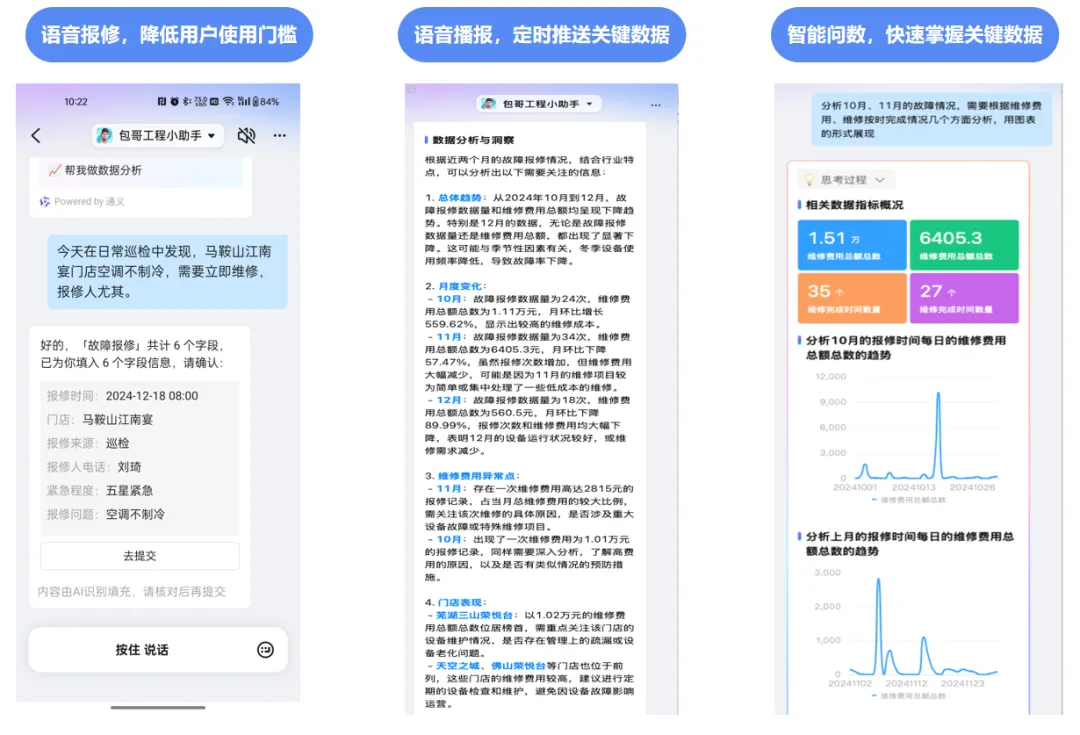
AI Assistant: One-Click Repair Reporting
During routine store inspections, if equipment anomalies are detected, repair work orders can be submitted via voice input through the AI assistant. At the same time, data on equipment operating conditions and maintenance costs can be quickly obtained through AI-based data queries. For data points that are of particular concern to store management, the system can proactively broadcast updates at scheduled intervals.
By leveraging DingTalk’s Yida low-code application development platform, Rongyue Tai has built an integrated banquet platform that breaks down data silos between departments. Using forms, workflows, and dashboards, the platform enables collaborative and paperless office operations, improves efficiency, and drives cost reduction and operational efficiency gains. With more than 20 stores, Rongyue Tai has implemented a comprehensive digital transformation covering all business processes across the group and individual stores. Compared to full-code custom development, the company has saved over 1 million yuan in software development costs. In terms of development time, traditional full-code coverage is estimated to take 10–12 months, whereas the current project took only four months. The digital platform built by the group using Yida has now been fully launched, completing the project 6–8 months ahead of schedule.
General Manager Li stated: “Based on DingTalk’s Yida banquet integration platform, which covers the entire business management scope of the large banquet industry, we are happy to share our construction experience with peers, helping them avoid detours and contributing to the advancement of banquet industry and store management.”
DomTech is DingTalk’s officially designated service provider in Macau, specializing in providing DingTalk services to a wide range of customers. If you’d like to learn more about DingTalk platform applications, please feel free to contact our online customer service or reach us by phone at +852 95970612 or by email at [email protected]. We have an excellent development and operations team with extensive market service experience, ready to provide you with professional DingTalk solutions and services!