




 Português
 English
"The landscapes of southeast China, especially those in Yuhang County, are the most beautiful."
The lively rivers and waterways not only have earned Hangzhou the reputation of "Heaven on Earth," but also have made it a crucial transportation hub connecting north-south and east-west traffic, thanks to its naturally dense water network.
Zhejiang Jiaoyuan
Located in Hangzhou, Zhejiang Transportation Vocational Technical College (hereafter referred to as "Zhejiang Jiaoyuan") was founded in 1958 and is widely known as the "Whampoa Military Academy of Transportation Talents in Zhejiang." Over its 66 years of development, Zhejiang Jiaoyuan has consistently remained at the forefront of vocational education in China. It has prominently showcased Zhejiang's transportation expertise among vocational institutions, producing tens of thousands of professionals for the transportation industry. These graduates have strongly supported the construction of Zhejiang as a high-level transportation powerhouse, painting a magnificent picture: "Wherever there is transportation, there are Jiaoyuan students."
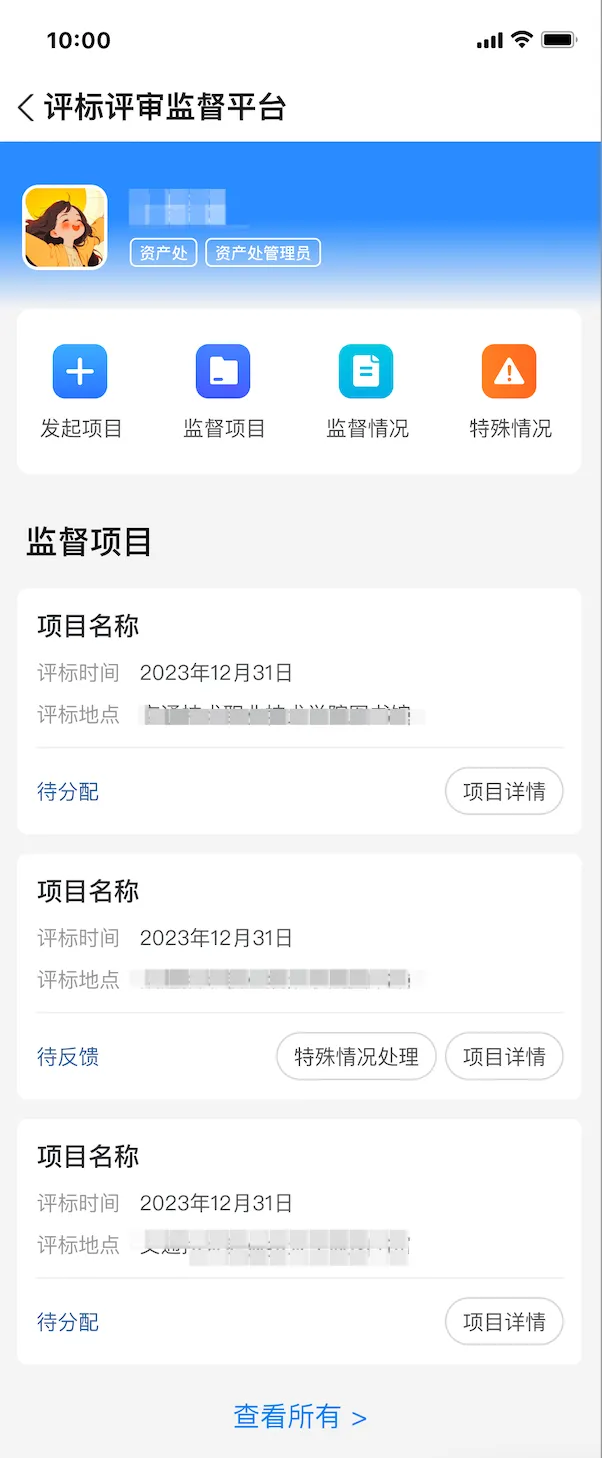
In recent years, leveraging the "Double High Plan" initiative, Zhejiang Jiaoyuan has deepened collaborative education, upgraded campus infrastructure, and led the way in using digital intelligence to enhance its programs. In particular, in terms of smart campus management services, the college has launched the "Jiaoyuan Ding" app based on the "Dedicated DingTalk" platform. Within just two years, the college has rapidly risen to the top ranks in Zhejiang Province's evaluation of smart campus construction among universities, becoming a provincial benchmark for informatization. With "Jiaoyuan speed," the college has set a new standard for what a smart campus should look like.
This edition of "Ding Talk Case" takes us inside Zhejiang Jiaoyuan to explore how the college uses "Dedicated DingTalk" to create a seamlessly integrated, highly customized digital platform, providing faculty and students with a "self-service, zero-visit" campus experience.
From Fragmentation to Integration: The Birth of a Super App
In 2021, faculty and students at the college commonly reported that the "online service" processes, which were supposed to ease their workload, had not delivered the expected convenience: "Previously, collaboration across office workflows was extremely inefficient. We had 'WeChat, DingTalk, the online service portal, and various department-specific mini-apps' running in parallel, and there was no unified entry point for faculty and students to use."
Beyond the fragmented access points, the lack of data interoperability and slow response times further contributed to the inefficiency of online services. Common issues included inconsistent student information across different systems, and personnel data changes in the HR system failing to synchronize in real time with the office and finance systems—resulting in data that could not truly flow freely between systems.
It was in this same year, against the backdrop of Zhejiang Province's comprehensive push for digital reform, that Zhejiang Transportation Vocational Technical College launched the "Three-Year Action Plan for Digital Reform (2021–2023)." The plan called for the efficient development of a new digital reform platform, mechanism, and model under the framework of "1+5+2": building one public foundational platform, developing more than five landmark cross-domain application scenarios, and driving innovation in data governance and cybersecurity applications. The goal was to effectively address the pain points, challenges, and pressing concerns faced by faculty and students.
After extensive research into various products on the market and learning from other schools' "experiences in crossing the river," the faculty at the Library and Information Center identified DingTalk as the optimal solution. The school's directory was built on DingTalk, and the "one scenario, one group" feature greatly enhanced the convenience of serving different campus scenarios. In addition, DingTalk's social attributes, data security, and compatibility performed exceptionally well, and it integrated smoothly with the school's existing data middleware and office platforms, making it a "well-rounded warrior" with no obvious weaknesses.
To better meet the school's needs, Zhejiang Jiaoyuan chose the more secure, flexible, and efficient "Dedicated DingTalk," becoming the first higher vocational college in the province to take this bold step.
From "Self-Service, Zero Visits" to Over 90% Faculty and Student Satisfaction
These long-standing, persistent problems in many universities have been systematically resolved at Zhejiang Jiaoyuan.
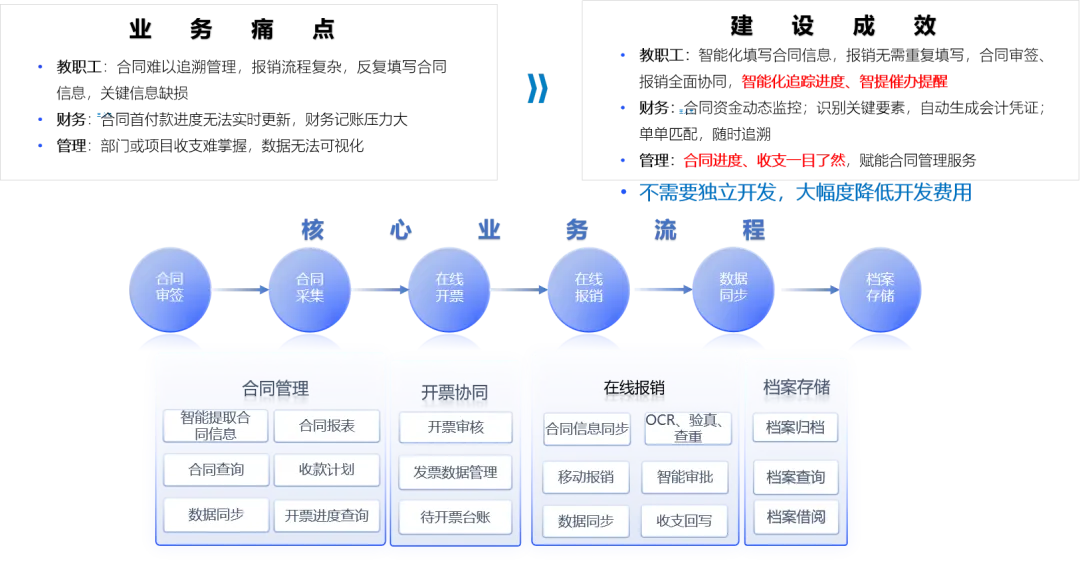
The "Jiaoyuan Ding" app supports user identity verification, digital stamping, and electronic invoice authenticity checks. Faculty and staff can simply submit an online request, sign documents electronically, and print various certificates on their own—all without having to shuttle between administrative buildings, HR offices, or the finance department. There's no need to avoid holidays, weekends, or times when key personnel are away. This has transformed the experience from "filling out one form and making multiple trips" to "self-service with zero visits."
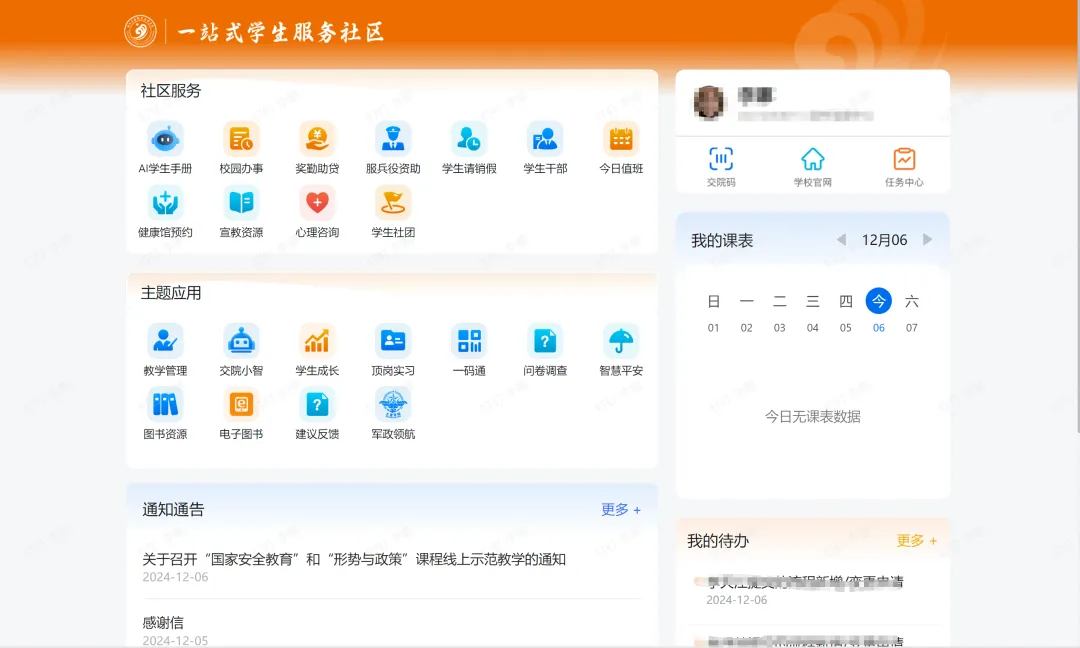
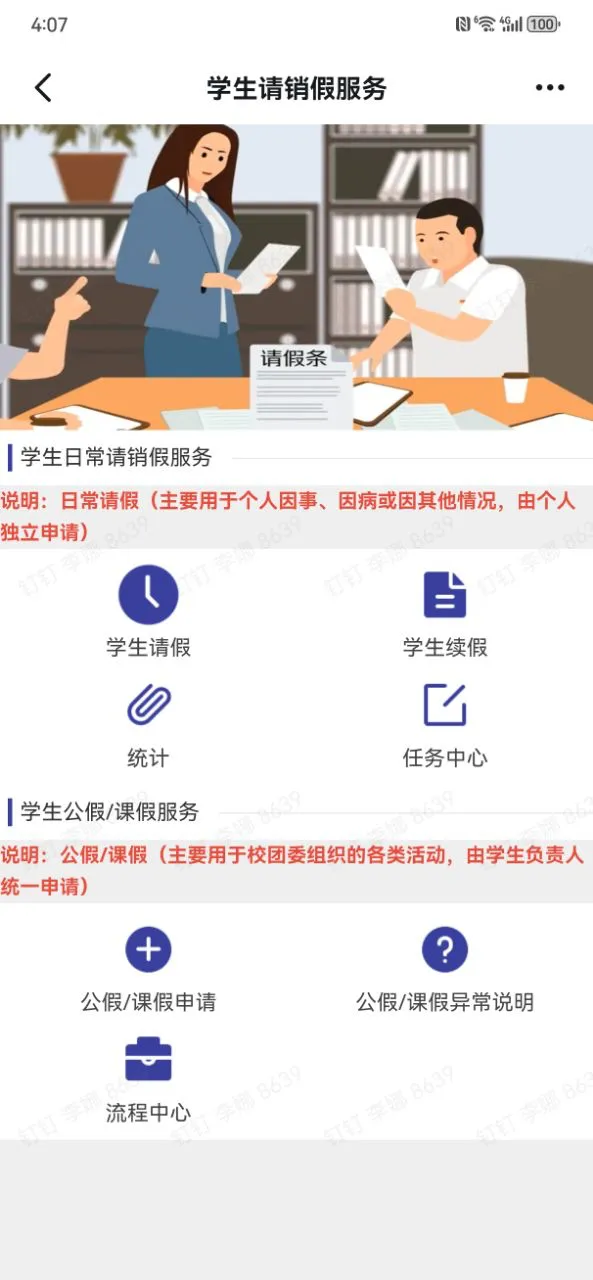
The breakthrough in faculty and staff services prompted Zhejiang Jiaoyuan to turn its attention to upgrading the student-facing systems. In 2024, the college launched the "Jiaoyuan Ding" one-stop student community, which enables students to handle daily activities online, including registering for club activities, applying for scholarships, grants, and loans, booking event spaces, and accessing psychological counseling. This approach embodies the school's commitment to "balancing study and reflection" and "integrating knowledge with practice," resonating deeply with every student.
For example, in response to the call to "step off the internet, out of the dorms, and onto the playground," the number of student clubs on campus has surged. However, recruitment, registration, and event scheduling for these clubs were previously handled entirely through paper-based processes, requiring enormous amounts of manual effort. During scholarship evaluation periods, class representatives had to rely on outdated, manual methods for tallying scores and verifying data—processes that were both inefficient and prone to errors. With the help of the "Jiaoyuan Ding" one-stop student community, these tasks, which once consumed significant manpower and time, have been streamlined. Students can now submit applications and complete procedures online, with results readily available and progress clearly visible at a glance.
立即提升團隊協作效率
免費試用釘釘,改變你的工作方式。